
Front Row Seat: Dr. Fatima Cardoso on Aiming Higher - Hope and the Road to a Cure
Listen to full episode :
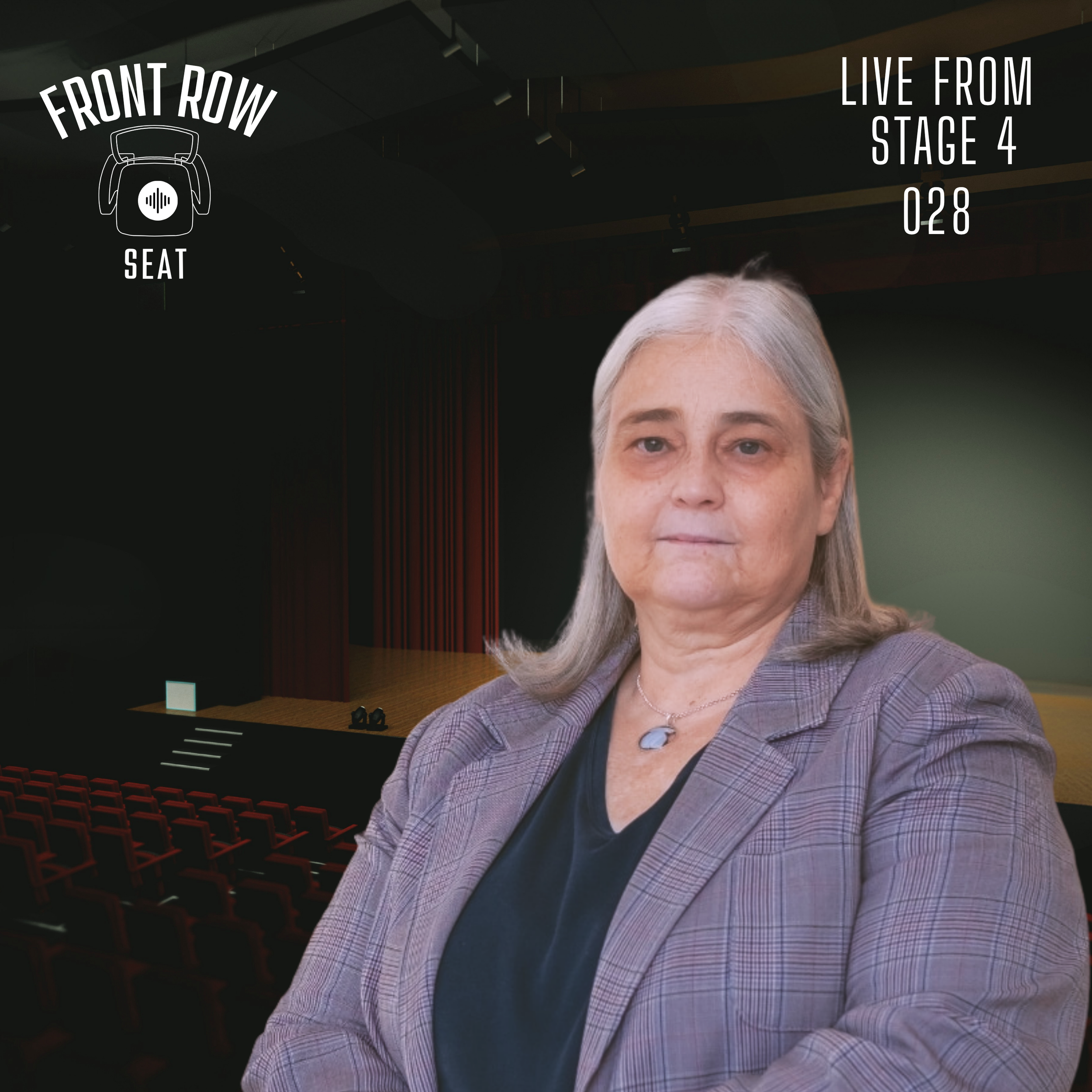
Live from Stage 4 | Episode #028 | 05/12/2026 | Front Row Seat
Guest
Dr. Fatima Cardoso, MD
Dr. Fatima Cardoso is a world-renowned oncologist and the visionary behind the ABC (Advanced Breast Cancer) Global Alliance. She currently serves as Head of Clinical Trials, Scientific Affairs and International Development in Breast Oncology at the Centre Antoine Lacassagne in Nice, France. Prior to this, she spent over a decade as the Director of the Breast Unit at the Champalimaud Clinical Center in Lisbon, Portugal, where she built a global reputation for excellence in clinical care and research.
As the lead author of the International ABC Consensus Guidelines, Dr. Cardoso is the driving force behind the global standards that dictate how metastatic breast cancer is treated today. Her research interests are deeply rooted in clinical-translational medicine, with a specific focus on new drug development, biology-driven treatment strategies, and the de-escalation of treatment to improve patient quality of life. She is also a leading expert in breast cancer in young women and male breast cancer, areas that are often under-researched.
Her elite professional appointments include serving on the Board of Directors for the European Society for Medical Oncology (ESMO) and as the former Chair of the EORTC Breast Cancer Group. Among her many honors, she has received the prestigious ESMO Lifetime Achievement Award and the Order of Merit from the Portuguese Government. A fierce advocate for the patient voice with over 300 scientific publications, Dr. Cardoso remains dedicated to the ambitious goal of doubling the survival of MBC patients by 2035.
Quick Summary
In this episode of Life from Stage IV, host Victoria Goldberg is joined by Dr. Fátima Cardoso — world-renowned medical oncologist, advocate, and president of the ABC Global Alliance — for a sweeping conversation about where the fight against metastatic breast cancer stands today, and where it needs to go next.
Together, they examine the ABC Global Alliance's landmark 10-year global report (2015–2025), a comprehensive look at progress across 10 ambitious goals set a decade ago to improve the lives of people living with advanced breast cancer worldwide.
What You'll Hear
The Good News Five-year survival rates for metastatic breast cancer have climbed from 26% to 33% over the past decade. HER2-positive patients are now routinely living 10 to 15 years (and sometimes longer ) with metastatic disease. Patient advocacy has grown dramatically, with over 300 member organizations across 120 countries now united under the ABC Global Alliance. Awareness, information access, and communication between patients and healthcare providers have all improved meaningfully.
The Hard Truths Of all 10 goals, only one moved in the wrong direction: inequality. Access to care has become more unequal, not just between high-income and low-income countries, but within the same country, and sometimes within the same city. Triple-negative breast cancer survival has barely budged, improving by only two months over the entire decade. Fewer than 10% of cancer patients worldwide participate in clinical trials, and racial and ethnic disparities in trial enrollment remain stark. Meanwhile, clinical trial design is trending back toward progression-free survival rather than the gold standard of overall survival — a regression Dr. Cardoso calls out directly.
Looking Ahead Dr. Cardoso and Victoria discuss the ABC Global Alliance's charter for the next decade (2025–2035), including the push to count metastatic patients accurately in cancer registries, expand access to multidisciplinary and guideline-based care, develop the first quality-of-life tool specifically designed for metastatic patients (the EORTC QLQ-MBR44), and secure stronger work, social, and financial rights for those living with metastatic disease.
Most significantly, they address a profound shift in thinking: for the first time, the global community is allowing itself to say the word cure — not as a distant dream, but as a realistic horizon for some patients, if the science and the will to reach it are there.
Key Topics Covered
The ABC Global Alliance: its origins, mission, and global reach
A decade of progress on survival, quality of life, stigma, and patient rights
Growing inequality in cancer care — within countries, not just between them
HER2-positive vs. triple-negative outcomes: why the gap is widening
PFS vs. OS: why the endpoints we choose in clinical trials matter for patients
The fight to count metastatic patients accurately in cancer registries
How Australia's real count revealed far more metastatic patients than estimated
Updates to the SEER database and what they mean for U.S. patients
The debate around classifying metastatic breast cancer as a chronic disease or disability
Why misinformation remains a serious threat — and how the Alliance is fighting it
Patient-centered dosing and the legacy of Anne Loser
The bold new charter: what the global MBC community is committing to through 2035
ABC Global Charter 2.0 2025-2035
The ABC Global Alliance updated its charter for the 2025–2035 decade to address the gaps identified in their ten-year global report. Here are the 10 Goals designed to drive progress for people living with advanced breast cancer (ABC/MBC):
Double Median Overall Survival: Aiming to significantly extend life for patients with ABC by 2035 through better access to treatments and research.
Improve Quality of Life (QoL): Ensuring that QoL is measured in clinical practice and trials using validated tools (like the EORTC QLQ-MBR44) to prioritize how patients actually feel.
Ensure Access to Multidisciplinary Care: Every patient should have access to a specialized team, including oncologists, nurses, and supportive care, regardless of where they live.
Provide High-Quality, Accurate Information: Guaranteeing that every patient receives understandable, evidence-based information about their diagnosis and treatment options.
Expand Access to Supportive & Palliative Care: Integrating these services from the moment of diagnosis to manage symptoms and emotional distress.
Increase Public Awareness & Reduce Stigma: Changing the global narrative about metastatic disease to reduce the isolation and discrimination patients often face.
Empower the Patient Voice: Ensuring patients are active partners in their own care decisions and have a seat at the table in policy and research discussions.
Ensure Equitable Access to Treatment: Working to remove financial and geographic barriers so that life-saving drugs and diagnostics are available globally.
Improve Data Collection & Registries: Supporting efforts (like the SEER updates) to accurately track metastatic patients and recurrences to better understand the community's needs.
Increase Research Funding for ABC: Directing more global research dollars specifically toward advanced/metastatic disease rather than focusing solely on prevention and early-stage cure.
ABC Global Decade Report (2015–2025)
The ABC Global Decade Report (2015–2025) evaluated the progress made on the original 10 goals set in 2015. While there were major scientific breakthroughs, the report highlights a "tale of two worlds," where medical advances often outpaced the social and structural support systems.
Here is a summary of the 2015–2025 report organized by those original goals:
Goal 1: Double Median Overall Survival
Progress: There has been significant progress in certain subtypes (like HER2+ and some HR+), with many patients living much longer than they did a decade ago.
Status: While survival is increasing, it has not yet "doubled" across all subtypes, and progress remains highly dependent on a patient's access to the latest therapies.
Goal 2: Improve Quality of Life (QoL)
Progress: QoL is now a standard "secondary endpoint" in most clinical trials.
Status: Despite more talk about QoL, patients reported that it is still rarely prioritized in daily clinical practice, and tools to measure it (like the EORTC tools) are only just now becoming specialized for MBC.
Goal 3: Access to Multidisciplinary Care
Progress: Specialized breast units have increased in many high-income countries.
Status: Globally, access is still very uneven. Many MBC patients are still treated by generalists without the support of specialized nurses, palliative care, or nutritionists.
Goal 4: Access to High-Quality Information
Progress: There is more information available online than ever before.
Status: The report found a "data dump" problem—patients are overwhelmed by information but often lack personalized guidance from their doctors on how it applies to them.
Goal 5: Access to Supportive & Palliative Care
Progress: Palliative care is becoming less of a "taboo" word and is being introduced earlier.
Status: It is still often confused with "end-of-life care." Many patients still don't receive these services until the very final stages of their journey.
Goal 6: Public Awareness & Reducing Stigma
Progress: Campaigns like "Light Up MBC" and the work of the Alliance have made the term "metastatic" more common.
Status: Stigma remains high. Many patients feel "abandoned" by the pink-ribbon culture, and the public still largely associates breast cancer only with "early detection and cure."
Goal 7: Empowering the Patient Voice
Progress: Patient advocates are now frequently invited to major conferences (like SABCS and ESMO).
Status: While "included," patients often feel their presence is symbolic rather than influential in changing how trials are designed or how drugs are priced.
Goal 8: Equitable Access to Treatment
Progress: More drugs have been added to the WHO Essential Medicines List.
Status: This goal saw the least progress. The gap between high-income and low-to-middle-income countries has actually widened as new, expensive targeted therapies become the standard of care in the West.
Goal 9: Better Data & Registries
Progress: Major efforts (like the SEER updates) began late in the decade to track recurrences.
Status: Most national registries still only track "de novo" (Stage 4 from the start) cases, meaning the majority of the metastatic community remains statistically invisible.
Goal 10: Increased Research Funding
Progress: There is a clearer understanding of MBC biology (genomics, liquid biopsies).
Status: The percentage of total breast cancer funding dedicated specifically to metastatic research is still disproportionately low compared to the percentage of deaths caused by the disease.
Organizations & Nonprofits Cited
ABC Global Alliance A federation of 300+ member organizations across 120+ countries dedicated to improving care and rights for people living with advanced breast cancer. Founded as a project of the European School of Oncology in 2016, became an independent nonprofit in 2019.
MBC Alliance (US) The U.S.-based metastatic breast cancer alliance, referenced as a close collaborator with the ABC Global Alliance to align advocacy efforts and patient rights.
European School of Oncology (ESO) The organization that initially housed and supported the ABC Global Alliance before it became independent.
EORTC (European Organization for Research and Treatment of Cancer) A nonprofit coordinating large-scale cancer research across dozens of countries. Partner with the ABC Global Alliance in developing the QLQ-MBR44, the first quality-of-life measurement tool designed specifically for metastatic breast cancer patients.
IARC (International Agency for Research on Cancer) The cancer statistics arm of the WHO, which collects data from cancer registries worldwide. Referenced in the discussion about metastatic recurrence rates and the 20–30% progression figure.
Patient-Centered Dosing Initiative (PCDI) An initiative started by the late Anne Loser focused on using lower, less toxic doses of cancer treatments while maintaining efficacy. Described as a model for how advocacy can drive change in oncology practice.
Databases & Research Bodies
SEER Database (Surveillance, Epidemiology, and End Results) The U.S. National Cancer Institute's primary cancer statistics database. Discussed in the context of its recent updates to better track metastatic recurrences using AI-powered tools, claims data linkage, and combined datasets.
Lancet Oncology / Lancet Commission Referenced twice — once for the stat that breast cancer deaths have nearly doubled in the world's lowest-income countries since 1990, and once as a commission in which the ABC Global Alliance participated to ensure metastatic breast cancer received dedicated coverage.
Conferences Referenced
ABC Global Alliance 8 Conference (Lisbon, late 2024) The international conference where the 10-year global report and the charter for 2025–2035 were presented. Victoria attended for the first time and describes it as a highlight of her year. The next conference is scheduled for November 2027 in Lisbon.
