
Developing Story: Your Cancer's DNA and the Trial Using It to Cure You with Dr. Pedram Razavi
Listen to full episode :
Live from Stage 4 | Episode #037| 07/17/2026 | Developing Story
GUESTS
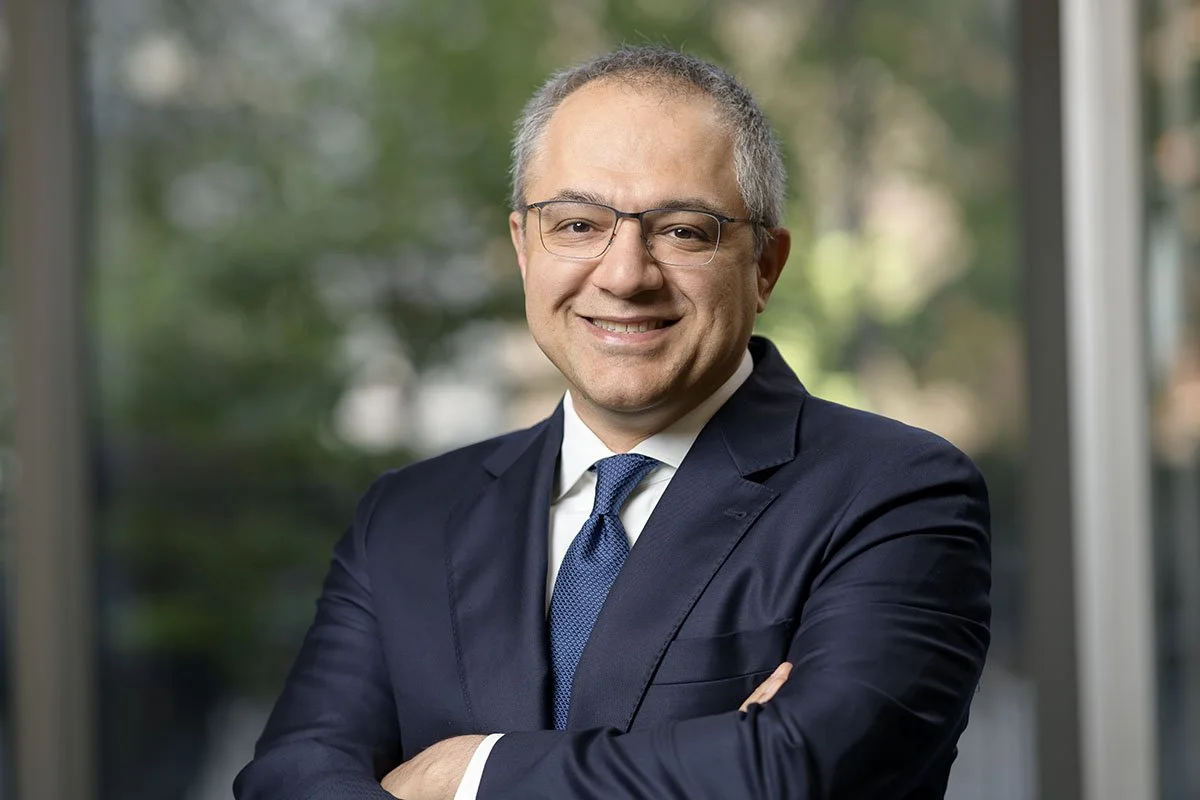
Pedram Razavi, MD, PhD, is a leading breast medical oncologist and physician-scientist at Memorial Sloan Kettering Cancer Center (MSK) in New York. He currently serves as the Director of Liquid Biopsy and Genomics for the MSK Biomarker Development Program, where he is at the forefront of changing how we detect and treat cancer.
Dr. Razavi’s clinical research is dedicated to the field of precision oncology. He leads pioneering work in the development of liquid biopsies—advanced blood tests that detect circulating tumor DNA (ctDNA). His research group focuses on using these "molecular snapshots" to monitor how breast cancer evolves in real-time, allowing clinicians to identify treatment resistance months before it would show up on a traditional scan.
In addition to his clinical practice, Dr. Razavi holds leadership roles in Breast Cancer Translational Research and serves on the Molecular Tumor Board, where he helps translate complex genomic data into personalized treatment plans for patients. His current research focus includes:
Early Detection of Recurrence: Developing ultra-sensitive assays to identify minimal residual disease.
Overcoming Treatment Resistance: Using genomic profiling to understand why certain breast cancers stop responding to therapy and how to pivot to more effective options.
Machine Learning in Oncology: Integrating multimodal data and AI to better predict patient outcomes and optimize therapeutic choices.
Dr. Razavi earned his MD from Tehran University of Medical Sciences and holds both an MPH and a PhD in cancer epidemiology from the University of Southern California. A widely published expert, he is a frequent speaker on the future of genomic-driven cancer care and the transformative potential of liquid biopsy technology.
Quick Summary
For decades, metastatic breast cancer has been treated as a disease to manage, not cure. That assumption is now being challenged.
In this episode of Live from Stage 4, Victoria Goldberg and Dr. Ellen Landsberger sit down with Dr. Pedram Razavi, breast oncologist and translational researcher at Memorial Sloan Kettering Cancer Center, to discuss the HERizon Breast Trial — a Phase 2 clinical trial he designed with a single ambitious goal: to cure a subset of patients with HER2-positive metastatic breast cancer.
At the center of the trial is ctDNA, circulating tumor DNA, tiny fragments of cancer's genetic material shed into the bloodstream that can now be detected at concentrations of one part per million. Dr. Razavi explains how this technology, combined with a carefully sequenced treatment strategy and an unprecedented level of molecular and neurological monitoring, creates the conditions to ask a question medicine has rarely been able to answer with confidence: can we eradicate metastatic breast cancer entirely?
The trial takes inspiration from hematologic oncology, where liquid biopsy-guided treatment has already helped cure patients with leukemia. It applies the same principles to HER2-positive breast cancer, a disease with some of the most effective targeted therapies in oncology, a population with a real chance.
This is one of the most science-rich episodes we have produced. Victoria pauses throughout to decode the terminology in plain language, so no medical background is needed to follow along.
The HERizon Breast Trial is open and actively enrolling at Memorial Sloan Kettering. If you have HER2-positive metastatic breast cancer, this episode may be directly relevant to your care.Key Takeaways
Key Takeaways
1. ctDNA can detect cancer that scans cannot see. Liquid biopsy analyzes cancer DNA shed into the bloodstream and can find disease at levels of one part per million, far below the threshold of any imaging technology. It is faster, more dynamic, and in some cases more accurate than a PET scan.
2. Not all liquid biopsy tests are equal. Panel tests scan a broad fixed menu of cancer genes but are expensive, noisy, and not personalized. Bespoke, tumor-informed assays are custom-built from your tumor's specific mutations, making them far more sensitive, precise, and practical for frequent monitoring.
3. The new gold standard is molecular complete response. A clean scan is no longer enough. The HERizon trial sets the bar at molecular complete response: no detectable cancer DNA in the blood at one-part-per-million sensitivity. Patients who achieve this threshold have dramatically better long-term outcomes.
4. The brain is the last frontier. CNS metastasis is the leading cause of death in HER2-positive metastatic breast cancer. The HERizon trial actively monitors the brain and spinal fluid of every enrolled patient, using drugs with proven CNS penetration in an attempt to eradicate disease there too.
5. Treatment is guided by biology, not by a fixed schedule. Rather than treating all patients the same way indefinitely, the trial escalates or de-escalates therapy based on what the ctDNA is showing in real time, a fundamentally different philosophy from current standard of care.
6. The trial targets de novo HER2-positive metastatic patients. Patients newly diagnosed with stage IV HER2-positive breast cancer who have not yet received anti-HER2 therapy are the focus, because treatment-naive tumors have the best chance of complete eradication before resistance develops.
7. This is the first study of its kind in solid tumors. The HERizon trial borrows the curative framework from leukemia and applies it to breast cancer for the first time, using ctDNA not just to monitor disease but to make active treatment decisions at every step.
The HERizon-Breast Trial
The HERizon Breast Trial is a Phase 2 clinical trial at Memorial Sloan Kettering Cancer Center testing a new approach to treating HER2-positive metastatic breast cancer — one guided not just by scans, but by what your cancer's own DNA is telling us in real time.
The trial uses ctDNA, circulating tumor DNA, tiny fragments of cancer genetic material shed into the bloodstream, as a live molecular readout of how well treatment is working. Rather than following a fixed treatment schedule, the trial adjusts therapy based on what the ctDNA and imaging show at each step. If the cancer is responding, treatment can be de-escalated. If residual disease remains, a different approved regimen is deployed to target it.
The treatments used in the trial are all FDA-approved and include:
Chemotherapy (paclitaxel, docetaxel, nab-paclitaxel) to kill or stop dividing cancer cells
HER2-targeted therapies (trastuzumab, pertuzumab, trastuzumab deruxtecan, trastuzumab emtansine, tucatinib, capecitabine) to attack the specific protein driving HER2-positive cancer growth
Endocrine therapy (tamoxifen, letrozole, anastrozole, exemestane) for hormone receptor-positive patients, to block estrogen from fueling cancer cells
What is new is not the drugs themselves, but how they are sequenced and personalized. Using ctDNA alongside standard imaging to make real-time treatment decisions is an investigational approach not yet approved by the FDA, and that is precisely what this trial is designed to evaluate.
The trial is open to patients with HER2-positive breast cancer that is either locally advanced and cannot be surgically removed, or has spread to other parts of the body.
Who Can Join This Trial
You may be eligible if you:
About your diagnosis:
Are 18 or older
Have been diagnosed with HER2-positive metastatic breast cancer (stage IV at first diagnosis, meaning it was already metastatic when first found)
Your HER2 status was confirmed as strongly positive (IHC 3+) by pathology
Your cancer can be measured on imaging scans
You have not received any prior treatment for breast cancer (chemotherapy, hormone therapy, or any HER2-targeted therapy)
About your overall health:
Are generally healthy and functional (able to carry out daily activities with little or no limitation)
Have a life expectancy of at least 12 weeks
Are considered a candidate for surgery now or potentially after treatment response
Have adequate blood counts, kidney function, and liver function (confirmed by lab work within 14 days of starting)
Have normal heart function (ejection fraction of 50% or above)
If you have hepatitis B or C:
You may still be eligible if your viral load is undetectable and you have completed or are on antiviral therapy
Pregnancy and contraception:
You must not be pregnant or breastfeeding
If you are of childbearing potential, you must use highly effective contraception during the trial
You are not eligible if you:
About your diagnosis:
Your HER2-positive status was determined by a lower IHC score (1+ or 2+) confirmed by a secondary test (FISH/ISH) rather than IHC 3+
You have already received any HER2-targeted therapy or any systemic cancer treatment
You have known brain metastases or cancer spread to the lining of the brain or spinal cord at the time of enrollment
About your health history:
You have a history of active lung inflammation (pneumonitis or interstitial lung disease) that required steroids, or currently have this condition
You have significant nerve damage (grade 3 or higher neuropathy)
You have had a serious heart event in the past 12 months (heart failure, heart attack, stroke, or unstable heart rhythm)
You have a known HIV infection
You have an active infection currently requiring antibiotics
You have had a major surgery within the past 3 weeks
You have had an organ or tissue transplant
You cannot swallow pills or capsules
You have a known allergy or intolerance to any of the study drugs
You are currently pregnant, breastfeeding, or planning to become pregnant during the trial
Other:
You are currently participating in another clinical trial or have used an experimental treatment within the past 2 weeks
You have another active cancer that has required treatment within the past 3 years (some skin cancers may be exceptions)
You are on long-term high-dose steroids or other immune-suppressing medications
What the Trial Is Trying to Prove
Primary Goal
The main question this trial is asking: can patients achieve a complete response — both on imaging and at the molecular level — and hold it for at least 12 months?
A complete response means no visible cancer on a scan. A molecular complete response means no detectable cancer DNA in the blood at one-part-per-million sensitivity. Achieving and sustaining both is the bar.
Secondary Goals
Beyond the primary question, the trial is also measuring:
Long-term disease-free survival — how many patients remain free of progression 4 years after enrolling
Sustained complete response at 3 years — how many patients maintain both imaging and molecular complete response 36 months into the maintenance phase
Overall survival — how long patients live from the start of treatment
How well molecular response predicts long-term outcomes — does clearing ctDNA at one year actually predict who stays in remission?
How quickly patients respond — time from treatment start to first complete response, both on imaging and molecularly
How long responses last — from the point of confirmed complete response to any sign of progression or death
CNS relapse — how long before any cancer reappears in the brain or spinal cord
Early warning from ctDNA — how much lead time does a rising ctDNA give before a scan shows progression?
Safety — how many patients experience significant side effects (grade 3 or higher) from the sequential treatment regimens
CSF findings — how many patients have cancer detectable in their spinal fluid at the start, and how many clear it after each phase of treatment
Research Questions (Correlative Objectives)
Alongside treating patients, the trial is collecting data to answer deeper scientific questions:
Which biological markers in blood, spinal fluid, or tumor tissue at baseline predict who achieves and maintains complete response?
How does ctDNA rise and fall throughout treatment, and what does that pattern tell us about long-term outcomes?
What changes occur in the tumor's immune environment after surgery?
How do cancers evolve and develop resistance over time, tracked through serial blood tests and tissue biopsies?
What combination of clinical, genetic, imaging, and pathology features at diagnosis best predicts outcomes?
How the Trial Works: Step by Step
The trial is structured in four sequential phases. Each phase is guided by how the cancer is responding, using both imaging scans and ctDNA.
Phase 1: Induction
Goal: Eradicate as much cancer as possible with the most effective first-line therapy.
Patients receive T-DXd (trastuzumab deruxtecan, brand name Enhertu) plus pertuzumab every 3 weeks for up to 15 cycles.
If complete response (on scan) and molecular complete response (in blood) are confirmed on 2 consecutive assessments after at least 9 cycles, the patient receives 3 more cycles of trastuzumab and pertuzumab, then proceeds to breast surgery followed by consolidation.
If the cancer progresses, doesn't fully respond after 15 cycles, or T-DXd causes unacceptable side effects, the patient moves to Salvage Induction.
If brain metastases develop during this phase, appropriate local treatment (radiation or surgery) is given first, then the patient either continues induction with close monitoring or moves to salvage.
In some cases, trastuzumab emtansine (T-DM1) may be substituted for T-DXd at the investigator's discretion.
Phase 2: Salvage Induction
Goal: A second attempt at complete eradication using a different proven regimen.
Patients receive taxane chemotherapy (paclitaxel, docetaxel, or nab-paclitaxel) plus trastuzumab and pertuzumab (the CLEOPATRA-based regimen, THP) every 3 weeks for 6 to 9 cycles.
If complete response and molecular complete response are confirmed on 2 consecutive assessments after at least 3 cycles, the patient proceeds to breast surgery and then consolidation.
If the cancer progresses or complete response is not achieved after 9 cycles, the patient leaves the trial and returns to standard of care.
Patients who cannot tolerate taxane may receive vinorelbine or continue on trastuzumab and pertuzumab alone if they have already completed at least 6 cycles of THP.
Phase 3: Consolidation
Goal: Target any remaining microscopic disease, with particular focus on the brain and central nervous system.
Patients receive tucatinib (Tukysa) plus capecitabine and trastuzumab every 3 weeks for up to 8 cycles (approximately 6 months).
Tucatinib and capecitabine both cross the blood-brain barrier, making this phase specifically designed to reach and eliminate any cancer that may have taken root in the CNS even before it is detectable on a scan.
Patients who maintain complete response and molecular complete response proceed to Maintenance.
Patients who develop leptomeningeal disease (cancer spreading to the lining of the brain and spine) during this phase leave the trial for standard of care treatment.
Phase 4: Maintenance and Active Surveillance
Goal: Confirm the cancer is gone and watch closely for any early signs of return.
Patients receive trastuzumab and pertuzumab every 3 weeks for up to 8 cycles (approximately 6 months). Patients with hormone receptor-positive HER2-positive disease may also receive palbociclib and endocrine therapy during this phase.
After completing the 8 cycles, patients enter active surveillance:
PET/CT scans and ctDNA blood tests every 3 months for 3 years
Endocrine therapy (tamoxifen, letrozole, anastrozole, or exemestane) for a minimum of 5 years if applicable
After completing the study, patients are followed every 6 months for up to 10 years.
Throughout Every Phase
All patients undergo regular:
Blood draws and ctDNA testing
PET/CT scans
Brain and spine MRI
Lumbar puncture (spinal fluid analysis)
Heart function monitoring (MUGA or echocardiogram)
How to Find Out If You Qualify
The best way to find out if you are eligible is to speak directly with the trial team at Memorial Sloan Kettering Cancer Center. You can also search for this trial on ClinicalTrials.gov — ask your oncologist for the NCT number or visit mskcc.org to find the HERizon Breast Trial listing.Trial Identification
Protocol Number: 25-258
Lead Organization: Memorial Sloan Kettering Cancer Center
Lead Investigator: Pedram Razavi
References
For more information, patients can contact Dr. Razavi’s office at 646-888-4821
Related Trials & Research Referenced in This Episode
CLEOPATRA What it proved: Adding pertuzumab to the existing trastuzumab + taxane chemotherapy combination significantly extended survival in HER2-positive metastatic breast cancer. The triplet regimen — taxane, trastuzumab (Herceptin), and pertuzumab (Perjeta), known as THP — became the standard first-line treatment for this disease and remained so for over a decade. The eight-year survival data from CLEOPATRA remains one of the most compelling long-term datasets in metastatic breast cancer. Why it matters here: THP is the salvage induction regimen in HERizon — the second attempt at eradication for patients who don't fully respond to T-DXd.
DESTINY-Breast (series, particularly DESTINY-Breast06) What it proved: Trastuzumab deruxtecan (T-DXd, brand name Enhertu) — an antibody-drug conjugate that delivers chemotherapy directly into HER2-positive cancer cells — showed remarkable response rates, including in patients who had already received other HER2-directed therapies. DESTINY-Breast06 extended its approval to earlier lines of treatment. Why it matters here: T-DXd is the primary induction agent in HERizon — the first and most powerful weapon deployed in the attempt to eradicate the disease.
HER2CLIMB What it proved: The combination of tucatinib (Tukysa) + trastuzumab + capecitabine produced meaningful responses in HER2-positive metastatic breast cancer, including in patients with active brain metastases. Tucatinib was the first HER2-targeted drug shown to cross an intact blood-brain barrier effectively, making it uniquely valuable for CNS disease. Why it matters here: The HER2CLIMB regimen is the consolidation phase of HERizon, specifically chosen for its CNS penetration to eliminate any residual cancer that may be hiding in the brain or spinal fluid after the main induction treatment.
PATINA What it proved: Adding palbociclib (a CDK4/6 inhibitor) to trastuzumab and endocrine therapy improved outcomes in ER-positive/HER2-positive metastatic breast cancer patients who had previously progressed on HER2-directed therapy. Why it matters here: HERizon borrows this concept for the maintenance phase — patients with ER-positive/HER2-positive disease receive a short course of palbociclib alongside trastuzumab and endocrine therapy after achieving molecular complete response, targeting any dormant hormone-driven cells that may have survived.
STOP-HER2 (Dana-Farber Cancer Institute, Dr. Heather Parsons) What it is studying: Whether it is safe to stop anti-HER2 therapy in HER2-positive metastatic breast cancer patients who have achieved prolonged no evidence of disease (NED) status, using ctDNA monitoring to detect any early signs of return. Why it matters here: It represents the same de-escalation philosophy underlying HERizon — the idea that some patients may not need to stay on treatment indefinitely, and that molecular monitoring can tell us who is safe to de-escalate. Dr. Razavi's team participated in this study.
The MSK-LINC study (MSK Liquid Biopsy for Interception of Cancer) What it found: In ER-positive metastatic breast cancer patients on first-line CDK4/6 inhibitors who had no evidence of disease on imaging, ultra-sensitive ctDNA monitoring revealed two distinct groups: some patients had very low but detectable ctDNA still fluctuating in their blood, while others had ctDNA that dropped to completely undetectable levels. This suggests that "no evidence of disease" on a scan does not always mean the same thing biologically — and that for a subset of patients, true molecular eradication may already be occurring. Why it matters here: This data underpins Dr. Razavi's broader vision for extending the HERizon approach beyond HER2-positive disease to ER-positive patients in future trials.
CDK-PREDICT (a multicenter, observational study assessing biomarkers to predict responses to CDK4/6 inhibitors and endocrine therapy in patients with HR+/HER2- advanced breast cancer) What it is: A machine learning model being developed by Dr. Razavi's group that uses baseline clinical and genomic data to predict which ER-positive metastatic breast cancer patients are most likely to be outstanding long-term responders to CDK4/6 inhibitor therapy. Early results show strong performance across large external patient cohorts the model had never seen before. Why it matters here: It is the proposed tool for identifying the next subset of patients — beyond HER2-positive disease — who could be candidates for a future curative-intent trial.
