
Symptoms Spotlight: Insomnia with Abigail Johnston and Melanie Sisk
Live from Stage 4 | Episode # 018| 3/3/2026 | Symptoms Spotlight
Listen to full episode :
Hosts
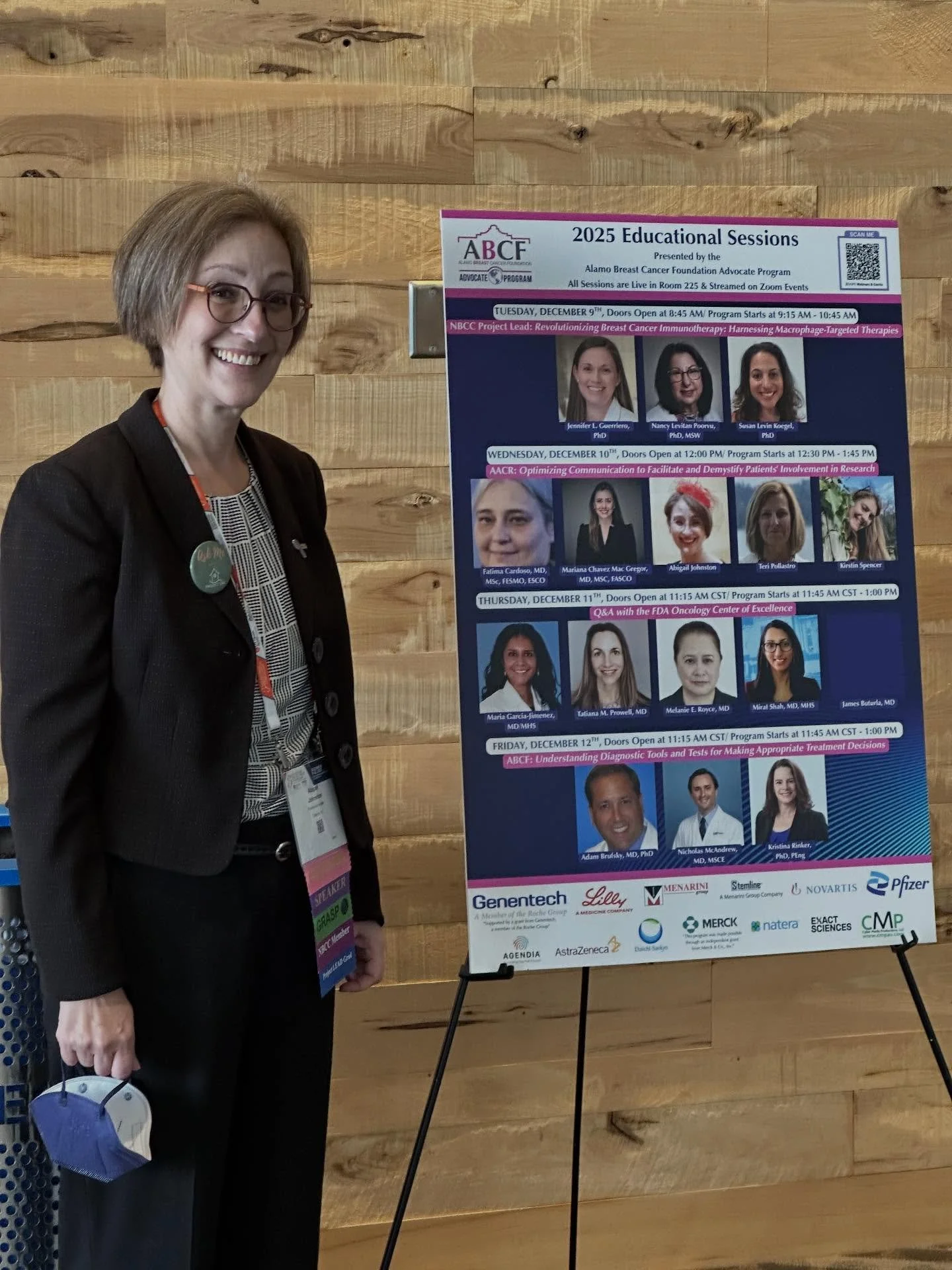
Abigail Johnston lives in Orlando, Florida and has been an attorney since 2002. In 2017, while tandem breastfeeding her boys (then 1 and 3), Abigail was diagnosed with de novo Stage IV Metastatic Breast Cancer (MBC) and soon thereafter discovered that she has a genetic mutation that predisposed her to developing cancer at ATM. Since her diagnosis, Abigail has focused her efforts on patient advocacy and supporting those people in the MBC Community through her experience and training, virtually and in person. She currently serves as the Director of Mentorship, Legal Clinics and financial services at Project Life, a founding member of the PIK3CA Pathbreakers, and volunteers with a variety of organizations including the MBC Alliance, FORCE, METAvivor, and many others. Connect with Abigail via her blog at NoHalfMeasures.blog.
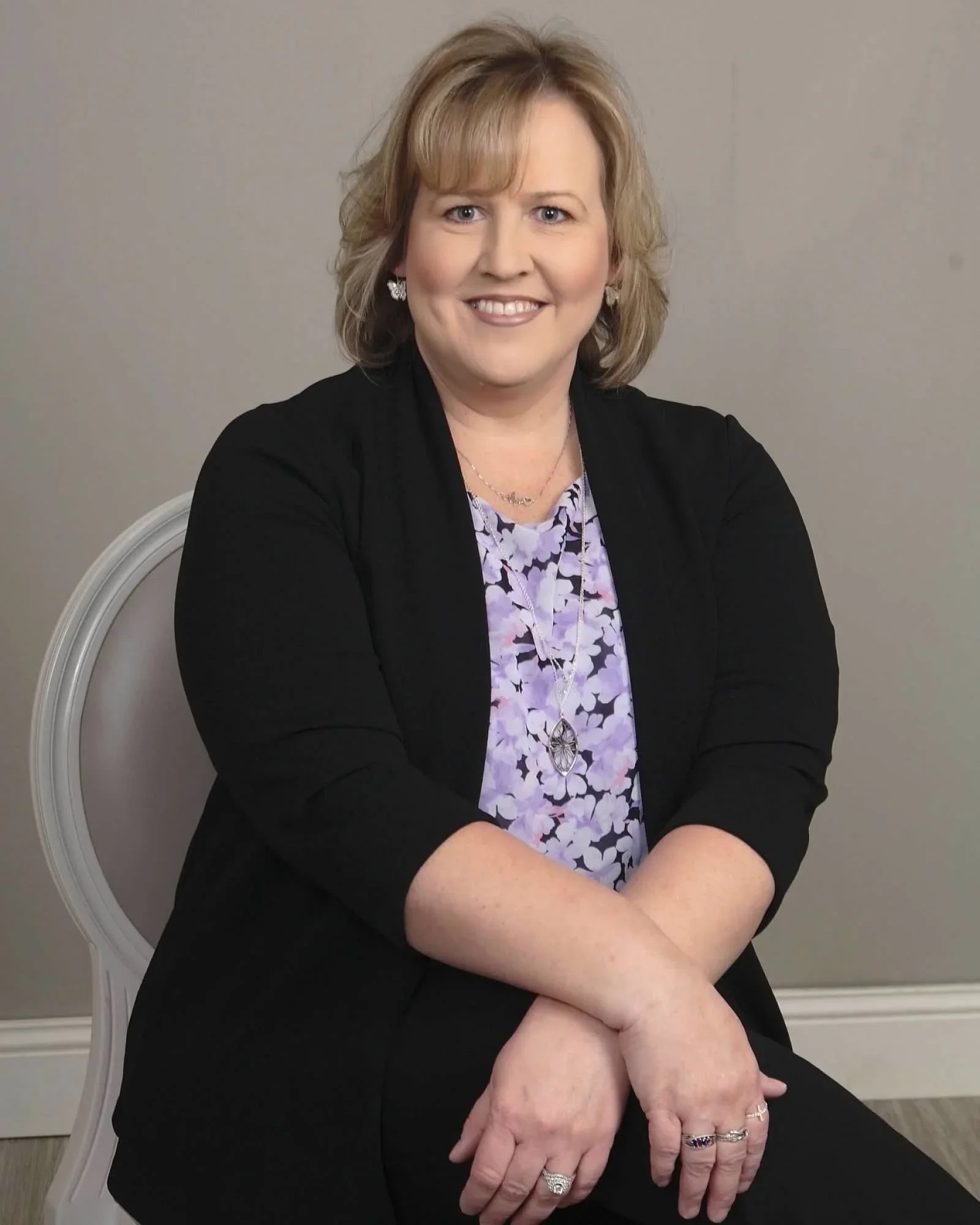
Melanie Sisk was a wife, mom of two young boys, and working full-time as a Registered Nurse when she was diagnosed with Stage 1A Breast Cancer at the age of forty-three. She completed her recommended surgery and radiation and was on endocrine therapy. Melanie thought she had put cancer behind her because she did everything right. However, she was diagnosed with Metastatic Breast Cancer at the age of forty-seven. Due to her metastatic treatment protocol and disease, she retired from her nursing career. Melanie has dived into advocacy work with an urgency to do what she can, while she can. She helped to start and moderate a local support group in her area of North Carolina called Piedmont Triad METsters. She is a trained volunteer with Cancer Services, Inc. and a Peer to Peer Support Group Leader and Light Up MBC State Captain for METAvivor. She is a Living Beyond Breast Cancer 2023 Hear My Voice MBC leadership alumna and a mentor with Project Life. She also serves on the MBC Leadership Committee for Surviving Breast Cancer. She is also a part of the new initiative, PIK3CA Pathbreakers.
Summary
Sleep disruption is one of the most pervasive challenges faced by people living with cancer. In this candid conversation, Abigail Johnston and Melanie Sisk explore how cancer diagnosis, treatment, and related life changes like menopause have impacted their ability to rest—and what they've learned about reclaiming healthy sleep.
Key Topics Discussed:
Reframing Sleep as Medicine Abigail shares how her naturopath encouraged her to think of sleep not as an afterthought, but as a critical component of her treatment plan—as important as any medication.
The Stress-Sleep Connection Both hosts discuss how the stress of cancer diagnosis and treatment creates a vicious cycle: stress disrupts sleep, and lack of sleep makes it harder to manage stress and pain.
Creating the Right Environment From eliminating light and screen time to using white noise and calming scents like lavender, Abigail and Melanie share the environmental adjustments that have helped them wind down.
Managing the Mental Challenge Melanie describes how nighttime brings the hardest moments—when distractions fade and pain becomes more noticeable, when worries about treatment and progression take over. She shares how simple activities like Sudoku help quiet an overactive mind.
Medication and Natural Remedies The conversation covers a spectrum of options including:
Anti-anxiety medications and antidepressants
Pain management at bedtime
Natural supplements like melatonin
Medical cannabis and hemp products
Strategic timing of existing medications to leverage sedative side effects
Finding What Works for You Both hosts emphasize that sleep solutions are highly individual. What works for one person may not work for another, and finding the right approach requires patience, experimentation, and ongoing conversations with healthcare providers.
Beyond Oncology Abigail and Melanie encourage listeners to consult specialists beyond their oncologists—including palliative care doctors, integrative practitioners, and cannabis nurses—who may have additional expertise in managing sleep issues.
The Bottom Line
Sleep challenges don't end once you find a solution. As treatment plans change and new medications are introduced, sleep strategies may need adjustment. This episode validates the frustration of insomnia while offering hope through practical strategies and the reminder that better rest is possible—and essential—during cancer treatment.Key Takeaways
Constipation isn't always obvious. It can present as small pellet-like stools, bloating, or feeling heavy, not just straining on the toilet.
Movement is medicine. Walking and physical activity promote peristalsis (the natural movement of stool through your intestines), especially important if you've been sedentary due to pain or fatigue.
Start with simple OTC remedies: MiraLax (stool softener), Colace, and milk of magnesia are accessible first-line options available at any drugstore.
Try the "prune juice slider.” Warm prune juice in a shot glass topped with melted real butter can be surprisingly effective.
Multiple factors contribute to constipation. Medications (like CDK4/6 inhibitors), diet, and reduced mobility can all play a role.
Don't be embarrassed to talk about it. Bowel movements are a normal part of life. Discuss symptoms openly with your oncology team, pharmacist, or dietician.
Beware of overcorrecting. Swinging between constipation and diarrhea can happen if you overmedicate. A GI specialist can help you calibrate the right approach for your body.
Troubleshoot first, then ask for help. Try simple interventions on your own, but don't hesitate to reach out to your medical team when needed.
Resources mentioned:
Melatonin: https://www.mayoclinic.org/drugs-supplements-melatonin/art-20363071
Medical Cannabis: https://www.mayoclinic.org/healthy-lifestyle/consumer-health/in-depth/medical-marijuana/art-20137855
Cannabis Nurse Association: https://cannabisnurses.org/
-
[00:00:39] Abigail Johnston: Melanie, I've been thinking a lot about insomnia and how so many different things can affect our sleep. Certainly the cancer experience, but also menopause. Has insomnia been something that you've struggled with?
[00:00:54] Melanie Sisk: Most definitely. Before this diagnosis, I never had a problem going to sleep 'cause it seemed like I was so wore out from working and all the events of the day.
And , I went to bed, I slept good, I got up, didn't think twice about it, but then after being diagnosed with, cancer, it's a whole new ballgame. And then also I was thrown into menopause at 47. That's a whole a nother ball game. So yeah, I have definitely struggled with insomnia.
[00:01:27] Abigail Johnston: One of the things a doctor, I think it was one of my naturopaths, said early on to me was to think about sleep as one of my medications. Part of my treatment plan was how much sleep I was getting. And that's been something that I've tried to think about, that it's not just the thing that you do last, or it's not just the thing that you are irritated about and just get through, maybe drink some extra coffee and push through, which is kind of how I dealt with any times I had disruptions in sleep prior to cancer.
But thinking about it as part of my treatment plan has helped me, I think, maybe place the right importance on it.
[00:02:09] Melanie Sisk: I remember talking to one of my providers at one point in time, and when you look at the stress in your life, good rest, good sleep is a good way to handle the effects that stress cause on your body.
So if you're already stressed out with cancer and then you're not getting sleep, you're not really getting the help that you need for the stress and it just. Piling it on, making it worse. So what are some things personally that you have done, Abigail, that's helped you with your sleep?
[00:02:41] Abigail Johnston: So we started a lot with the things in our bedroom, right?
Thinking about having the lights not too bright. Thinking about not watching screens too late at night, although I'm not always very good about that. Thinking about not eating too close to bedtime. Setting a time where we're winding down. I usually take a bath at night and that certainly helps me relax.
I know blue light is always something, that people think about. The different, waves, lengths of light that is emitted by different screens can affect our bodies. And medication has also been part of what has helped me. In a variety of ways too.
[00:03:29] Melanie Sisk: I'm someone that has to have noise when I sleep, so it's either a fan running or it's a noise machine. Depending on where I'm at. I also have to have it really dark in the room, no light, it can't stand any kind of light, and then. Yeah, that kind of sets the mood. Some people I know can even use like lavender candles or even taking a bath with lavender scents.
Lavender's a very calming scent that a lot of people can use for. Winding down, you know, your body has that circadian rhythm that it knows when it's time to get up. It knows when it's time to go to bed. So if you keep the same schedule and keep that rhythm the same, that's helpful as well too.
You know, your body doesn't like it when you stay up a little bit later, maybe watching a ball game or , getting together with friends, things like that you have to kind of recover from. But for me. I was having a lot of trouble like turning my brain off because when I would lay down to go to sleep, that's when I was more aware of the pain I was feeling in my body.
'cause when you're busy during the day, you're not trying to pay too much attention. So that's when I felt like I was in the most pain, or I was mostly aware of it when I laid down and was quiet. And then also my brain just thinking about all the things, thinking about treatment, thinking about progression thinking.
I mean, it's just all these different things running through your brain and I couldn't get it to shut off. So I even talked to my doctor. And so one thing I do is course take pain medication at bedtime, and then I also take an anti-anxiety medication and that kind of helps calm me down. And I know you're not supposed to have screens, but for me.
You know, playing a game with Sudoku kind of gets everything else off my mind, but the Sudoku game, right? So that's kind of like something that I do, which I know you're not supposed to have the light, but just getting my brain to think about just a game. Nothing important, just a Sudoku game, you know? So it doesn't think about cancer, and I find it too, you know, especially when you have a family.
You have everything going on during the day, you know different things, different noises. You know you love it, right? That's your family. But then at night when you're trying to go to sleep, it's just you and your thoughts and that's when I find it most difficult. How about you?
[00:06:00] Abigail Johnston: One of the first things that comes to mind is how I rarely sleep through the night, the night before scans, and how there's that, that episode or that specific time when there's just a whole lot more stress.
And I love what you were saying about just thinking about what we can do to quiet our minds that sure, we can talk about generalized things that people recommend, experts recommend, but we have to know ourselves. Obviously Melanie, you have figured out some things that work for you, and I think that's what everybody needs to do, right?
Try different thing until they figure out the things that work for them. I also take. Antidepressants and I have not just the medication I would take usually, but also then things to help calm my anxiety in specific moments. Quite frankly, I take something pretty much every time I go see the doctor because I'm stressed about seeing the doctor about appointments, ending on time, appointments not going well, that sort of thing, and there's just a lot of triggers there.
So thinking about the medication has also been helpful. I have used melatonin on and off for years. I always like the fact that it's a little more natural working with something that's already present in your body. But I think the biggest thing that has helped me with sleep has been medical cannabis, and that has been a remedy I have used for a variety of things when it comes to cancer.
I have restricted THC, which is the, part of cannabis that, works on your mind. To bedtime. So I am not quote unquote high during the day. I use CBD to manage pain and inflammation and other aspects of cancer and the medications we take. But that THC will often be the only thing that gets my brain to slow down and rest for the night.
So that's been a remedy that's been really effective for me.
[00:07:59] Melanie Sisk: Now, speaking of medical cannabis, I know you live in Florida. I live in North Carolina, so I would not even know the first thing about how to even access medical cannabis. Is it even available in my state? I, I don't even know. What would someone do if they wanted to look into that as being an option for them?
[00:08:24] Abigail Johnston: Yeah, a simple Google search can lead you to your state's either registry or what would be available in your state. But the other thing that is legal and available in all states in the United States are hemp products. So the cannabis or sometimes called marijuana plant. Is very similar to hemp. There are certainly chemical differences, but there are a lot of things that work almost as well with hemp derivatives, and that is something that isn't regulated in the same way that cannabis has been regulated.
But a whole lot more states are looking at the possibility not just of medical cannabis being available, but also regulating recreational cannabis, making it a little more accessible for people.
[00:09:12] Melanie Sisk: That's good to know. I know personally, I tried to go in one of these stores in my state that had these, I guess, hip products as a sleep alternative.
However, it didn't really work for me, made my mouth really dry. It's good to know because right now what I'm doing is working, but one day it may not work and I may need something a little bit stronger.
So it's really important I think, for everyone to find what works for them. Even some people do like warm milk at bedtime. Hey, it works for babies, right? Maybe it'll work for some humans. But, I think it's all individual
[00:09:51] Abigail Johnston: I love, Melanie, how you're bringing up just that one thing that might work for one person isn't gonna work for somebody else.
And I do wanna throw out that I have had the most benefit from working with a cannabis nurse, figuring out not just strains, but also dosaging, timing of taking cannabis, that sort of thing. And we'll make sure that the link to the Cannabis Nurse Association is in the show notes, so you might be able to find somebody near you.
That would be helpful. But I heard the same concern from a lot of people about getting addicted to or dependent on some kind of sleep aid that that has that, that potential. And that is something I think everybody should talk to their practitioners about, that concern or even that possibility.
Gabapentin is something that a lot of people take for nerve pain that also causes. You to be a little bit more drowsy. Metoprolol, which is something that I was diagnosed for. Cardiac issues also carries with it some, sedative type, side effects. And so we all may already be prescribed something that causes fatigue or causes our bodies to slow down a little bit more.
That looking at when you take the medication you're already taking. I'm talking about looking at that with your practitioner, but thinking about the fact that because we're already prescribed various things, that adjusting some of the timing could end up having a nice side effect, and we so rarely have nice side effects to our medication.
[00:11:31] Melanie Sisk: Even talking to your palliative care doctor about your sleep. You think about oncologists, you know, they know cancer, they know how to treat cancer, but sleep problems, that's really not their specialty. So yeah, just talking to your providers about what's available to you, and then also talking to other cancer patients, Hey, what do you do?
And then it kind of gives you an idea of, Hey, maybe I can try this. And hey, it doesn't hurt to try it. Melatonin doesn't cost that much at the drugstore. Hey, try it. It's natural, and if it doesn't work, then try something different. But I think you need to try something for several nights in a row to really know if it's gonna work.
It takes a little while for some of these things, but it's good to know that when you do figure it out and it works for you, keep doing it. I know one point in time I was doing better. Mentally, and I even thought about decreasing my antidepressant that I take, and I talked to my primary care doctor and her advice was, why it's working for you.
You deal with so much uncertainty in your life every day. It's not hurting you. So that kind of gave me more reassurance that, yeah, keep doing what I'm doing. If it's working, don't stop, keep doing it. It's not hurting anything and it's helping me and we have to deal with so much crap. Every single day and insomnia is definitely one of the things.
[00:12:58] Abigail Johnston: Yeah. Such a good reminder that this is an ongoing conversation, right? It's not like you figure it out and you're done because there have definitely been changes over the years talking about anxiety as a specific event that is difficult or starting a new medication. I am currently on my 10th line of treatment and I have to sit back down with.
The cannabis nurse that I have worked with, or naturopaths or integrative doctors as things change because the inter, the interaction between different medications or when specifically we're taking medications can change as our medication profile changes or as our lines of treatment change. So just a good reminder that it's not a one and done, but an ongoing conversation so that we can remain as healthy as we possibly can while we're in cancer treatment.
