
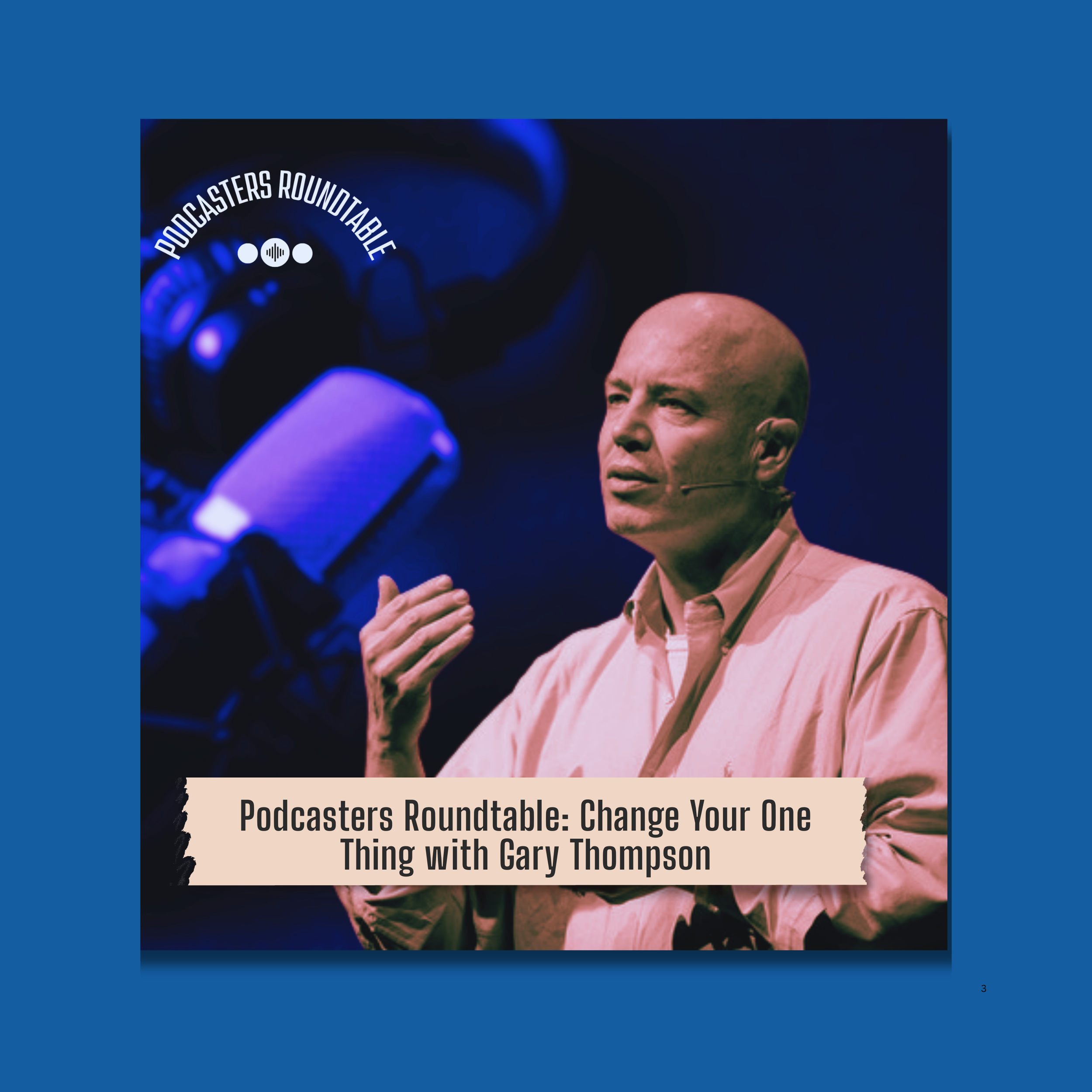
Live from Stage 4 | Episode # 019| 3/10/2026 | Podcasters Roundtable
Listen to full episode :
Guest
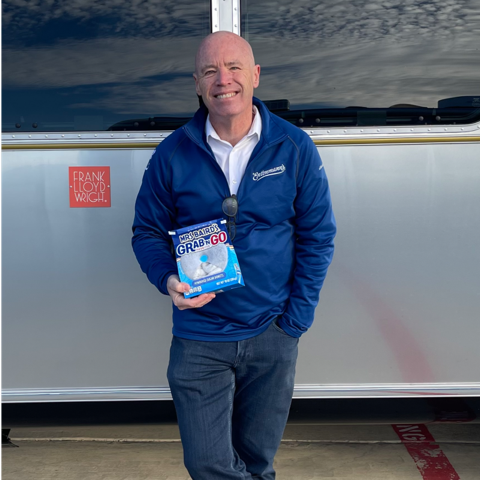
Love, Life, People, Technology and Connection - Gary In His Own Words
I love people, and I believe in “The Power of People. Connected.” Our ability to connect has evolved dramatically over the last several decades. From rotary phones on our walls and mainframe computers tucked away in large rooms, we now have the power of those mainframes, and more, in the palm of our hands. Phones are no longer phones. I’ve had a front row seat to this revolution since the early days of my career at Apple.
Sometimes people and technology collide in unexpected ways. One of those moments was meeting my late wife, Maureen, at Apple in Chicago. A love story was born. Apple changed the course of my career. Maureen changed the course of my life. Unexpected moments also have unexpected locations. When strangers become connections in a instant. When tapping accept leads to more than a ride and leads to a love crusade. That unexpected moment happened during an Uber ride, a ride sharing platform that wouldn’t be possible without the transformation of technology that now allows drivers and riders to connect. With phones. I tell the rest of that story in my LinkedIn profile.
My love of people and passion for human connection spans my professional career from Apple to Kimbia to the Executive Council and now Team Powdered Donut™. My deepest human connection was with my late wife, Maureen, my bride of almost 25 years. After 11 years with breast cancer, she took her last breath on October 21, 2014 due to metastatic breast cancer. My roles at the Side-Out Foundation, Blood Cancer United, and Susan G. Komen are born of that loss, and others. When faced with a terminal disease, the #onething we all want is one more day. One more day for human connection.
And, that passion for human connection is at the heart of the tradition I have kept in my wife’s memory for almost 11 years, taking powdered donuts to special places in her memory. Since Maureen’s passing, I have honored her memory by delivering bags of powdered donuts to meaningful places each year on October 21. What began as a way to turn grief into joy has sparked powerful connections and moments of healing. Team Powdered Donut™ makes this tradition about all of us. About all our stories. All our moments. All our human connections. “One Story. One Moment. One Donut at a Time.” For all the advances in technology, like Wally Byam, founder of the Airstream® in which I will travel, I dream of “new freedom, new places, new experiences, and new friendships.” Human connection. People. And love, like an Airstream, moves like a stream of air. There is no better way to take my love crusade, and donuts, on the road.
For a deeper peek into Gary’s professional background and education, visit his LinkedIn profile:
Summary
The Powdered Donut Tradition
The Team Powdered Donut™️ podcast name comes from a poignant memory from the weekend before Maureen passed. Though they knew things were difficult, they didn't realize the end was imminent. Gary took Maureen to a bakery in their Honda Odyssey (chosen for its automatic sliding doors, necessary for managing young children). When he asked for her favorite, she chose a powdered donut. She turned up the AC because cold air was easier to breathe with her pleural effusion. The powder blew everywhere in the car—Gary believes there was still powdered donut dust in it when he traded it in years later.
For 11 years, Gary has kept the tradition of honoring Maureen with powdered donuts on October 21st, the anniversary of her passing.
Why Gary Stays Connected to the MBC Community
Gary explains that he could have easily walked away from cancer after Maureen's death, but he sees Maureen in every person affected by metastatic breast cancer—the 44,000 women and some men who die from the disease annually. He believes everyone has something they can contribute, and 118 people dying from this disease every day is simply unacceptable.
Impact on His Children
When Maureen passed, Gary's children were 15, 13, and 10.5 years old—a son and two daughters. He acknowledges the profound impact of losing their mother, joking that "they got stuck with me and not mom," though he would have traded places with her in a heartbeat. The children have experienced major life milestones without their mother: Eagle Scout ceremonies, high school graduations, college graduations,weddings—all without mom present.
Gary discusses the concept of "financial toxicity," "time toxicity," and the unquantifiable shadow that loss casts over a family. After Maureen's death, the family made a pact: "It's taken one, we're not letting it take four more." They honor Maureen's memory by continuing to show up every day, just as she did while living with the disease and treatment.
Gary notes that his children at least have their own memories of their mother, unlike situations where children are very young at diagnosis. However, they also know a life of constantly running to appointments and mom being tired on Saturdays after infusions.
The Podcast Journey
Gary launched his podcast recently but his involvement with podcasting dates back to 2003-2006 when he ran Apple's education business in Texas. In 2005, Apple brought podcasting into the iTunes platform, making it mainstream. Gary still has an original iPod shuffle from that era and had someone on his team teaching schools how to create podcasts.
Last summer, Gary got the idea to tell stories and realized he wanted to launch a podcast as preparation for a road trip. Inspired by StoryCorps®️ ( ), Gary envisioned combining his love of people with over a decade of cancer advocacy experience. Originally, he planned to write a book about his love story with Maureen and do a book tour, but realized these stories might be better to keep as family memories. He pivoted to capturing other people's stories instead.
Gary has started building momentum with the podcast before embarking on the road trip, featuring guests he's met over the years through cancer advocacy. and life’s journey.
The Road Trip Plan
Gary's ambitious plan involves visiting most if not all 73 NCI (National Cancer Institute) Comprehensive Cancer Centers across the United States and other stops across the United States.
Timeline and Logistics
The road trip has specific constraints:
From TCU in May 2027
Will begin with a trial run in the Southwest this October, starting in Phoenix and returning home to Austin, TX in December.
The full cross-country journey begins June 2027, likely at ASCO
Takes July and August off each year
Travels in logical driving routes
Expected to run from June 2027 through approximately Summer of 2029
Gary has been using ChatGPT to help plan the logistics of the route.
What Happens at Each Cancer Center
At each location, Gary will:
Monday: Arrive and park the Airstream
Tuesday-Wednesday: Work with the cancer center to have people visit the podcast studio to capture and record stories, some private and others public
Thursday: Press and social media day, culminating in a big celebration party
Thursday evening: Celebrate everyone—patients, caregivers, nurses, researchers, and all who make cancer care possible
Who Gets Interviewed
Gary plans to interview a diverse range of people:
Patients and their families: Some interviews may be private archives for families (similar to questions Gary's own children wish they had their mother's answers to), while others may be public episodes.
Healthcare providers: Oncologists like Dr. Mariana Chavez Mac Gregor (who cared for Maureen), infusion nurses, and other care team members who are always present for patients.
Cancer center directors: To showcase what their centers are doing and encourage philanthropy—unrestricted dollars that allow experimentation beyond grant-tied funding.
Community nominations: Gary plans to create a system for people to submit recommendations and nominations, allowing the community to help guide who gets featured, as well as a “platform for love,” as he shared with me later, to connect the people and stories along the way.
Organizations and Advocacy
Gary is currently board chair of the Side-Out Foundation, an organization born from volleyball. "Side-Out" in volleyball means getting the ball back—the foundation's name represents getting control back over your life.
The organization was founded by Rick Dunetz after his mother Gloria was diagnosed with metastatic breast cancer the same day he became a high school volleyball coach. Side-Out focuses on creating personalized treatment plans for individual patients, wrapping the knowledge of various experts around each person. Gloria was "patient zero" and gained additional years of life through this approach. Researcher Daniel Von Hoff generously lent his pancreatic cancer clinical trial protocol to Side-Out.
Gary mentions several important MBC organizations:
MBC Alliance: Brings organizations together under one umbrella
METAvivor: Solely focused on metastatic breast cancer
Pink Fund: Financial assistance
Infinite Strength Offers support to single mothers living with MBC
The Nightbirde Foundation is a 501c3 organization that helps bring hope to women, particularly with breast cancer.
Livestrong: Supports the survivor community with resources and support networks
The Patient Story human answers to all cancer questions
Marketing and Promotion Strategy
Gary approaches podcast growth from a marketing perspective: when you have a guest, that guest brings their own community. By having guests share their episodes with their networks, you create a ripple effect.
He also emphasizes:
Longevity: Early on, listeners might only find a couple episodes of interest, but as the catalog grows, new listeners can explore more content
Patience and fortitude: Audience builds slowly over time
Repurposing content: Plans to create one-minute clips of impactful moments to share on social media, enticing people to listen to full episodes
Episode Length
Gary finds the ideal length to be 30 minutes to just over an hour. Less than 30 minutes doesn't allow for deep conversation. The key is being long enough to "follow the rabbit trail of questions to get to the unexpected answers that are the real gold," as Suzanne Stone (CEO of Livestrong) advised him.
Target Audience
Unlike typical demographic targeting, Gary's ideal audience is "someone looking for their one thing." His philosophy centers on a quote he developed after Maureen passed: "We don't have to change everything. We just have to change our one thing. And if we each indeed change our one thing, then we will have changed everything."
His audience isn't a category or demographic—it's individuals who recognize that each person has the capacity to create great change. He emphasizes that "love is neither big nor small. It's always enough."
Most Surprising and Favorite Moments
Most Surprising:Dr. Gail Bones, whom Gary met on a Southwest flight from Austin to Nashville. He was originally in an aisle seat next to a large man in the middle seat. Rather than playing "the shoulder game," he moved and found a seat between a gentleman by the window and a woman in the aisle who was deep in Bible study. They had an incredible conversation, stayed in touch, and she became his season one finale guest—pure serendipity.
Favorite Moment: His interview with Suzanne Stone of Livestrong, particularly her insight into how cancer diagnosis doesn't just affect the patient—it changes their entire ecosystem of life. Time usage changes, appointment schedules change, finances change, even the type of car you drive changes (due to neuropathy and other factors). It's not just going to the doctor for a prescription—it's a complete ecosystem change affecting family dynamics and everything else.
Other Notable Guests
Gary shares stories about several interesting guests:
Leon Platanias: Director of Northwestern Cancer Center (recent episode)
Emma Halter: Recent University of Texas graduate, libero volleyball player, now plays for D and D Ignite
Ruby Dice: (link to her website here )Austin-based Americana artist, bassist, and bandleader known for blending roots-driven songwriting with a bold, modern edge.
Podcasting Philosophy and Advice
When asked about advice for aspiring podcasters, Gary offers this guidance:
Don't launch a podcast just to have a podcast. Instead, if you have something you want to share with the world and podcasting is the best vehicle to share it, then you're not really launching a podcast—you're taking something you love and using podcasting as the mechanism to share it with people who want to hear it.
He contrasts this with Victoria's experience of starting her first podcast (MBC Live with Lisa Ko) without ever having listened to a podcast before—but it worked because she had a purpose and message to share.
Gary also discusses different approaches: some podcasters (like Victoria and Abigail) prefer creating themed series with multiple episodes on specific topics, while his approach is more intuitive and relationship-driven. He emphasizes there's no one right way—whatever works best for you is the right approach.
Personal Reflections on Empty Nesting
With his children now grown (one a Junior in college, others having graduated from college), Gary reflects deeply on this new phase of life. He shares several insights:
The letting go process: Watching his children become who they're meant to be brings great joy, but it requires separation. His son is now married, and Gary recognizes the biblical concept of "cleaving and leaving"—his son has his own family now and potential future as a father.
Honest perspective: While he misses the "extra heartbeat" around the house, empty nesting has made the podcasting and road trip possible. He wouldn't have the time for these projects if he were still in active parenting mode.
Relationship timing: People often want to set up widowers, but Gary realized that getting his kids through college was "job one." Disrupting that grieving phase with a relationship wouldn't have been appropriate for them or for him. The timing simply wasn't right.
Rediscovering himself: Most profoundly, Gary shares that he's building a relationship with himself for the first time in 23 years—since the phone call when Maureen heard the words "you have cancer." That shadow affected him deeply. As an empath who always cares about everyone else first, he's now discovering who Gary is again. His assessment: "I don't think he sucks too bad. So far so good."
Being "self full": From a men's group he participated in, Gary learned the concept of being "self full" rather than selfish—an important distinction for everyone, especially in the MBC community.
The Broader Mission and Future Vision
Gary's motivation is clear and powerful: he sees the humanity in people living with MBC and wants this experience to "suck less." The world needs these people here as long as possible, and for as long as he's here, that's what will motivate him.
Long-term vision: After the road trip (expected to conclude around Summer 2029), Gary plans to:
Write a book compiling the stories from the journey
Continue "sprinkling love" like he sprinkled powdered donut dust and Maureen's ashes
Eventually create a retreat center outside Fredericksburg, Texas (inspired by Bob Goff's Oaks Retreat Center in Southern California)
Dedicate part of each year to hosting people from the MBC and cancer communities
Sustainability: When asked about his plans for sustainability, Gary responds simply: "I will close up shop when I take my last breath." Until then, he's going to pour love into everything he does because "I still have time" and he wants others to have time too.
Key Themes and Philosophy
Throughout the conversation, several themes emerge:
The Power of One Thing: Gary's central philosophy that we don't have to change everything—just our one thing. If everyone changes their one thing, we will have changed everything. His podcast celebrates people finding and pursuing their one thing.
Love as a Universal Force: Team Powdered Donut represents Gary's love language—his symbol for love that he wants to spread. Just as Abigail's love language is organizing things, everyone has their own way of expressing love and making a difference.
Being Present: Influenced by Leo Tolstoy's "Three Questions," particularly the concept that the most important person is the one you're with right now. Gary practices this philosophy in both his podcasting and his weekend Uber driving (another great way he likes to meet people!).
Community-Driven Solutions: Gary believes the answer to much of cancer advocacy is community-driven. It's not about one thing—it's about many "one things" orchestrated and harmonized to have the biggest possible impact.
Stories Choose Themselves: Rather than rigidly planning content, Gary remains open to people's hearts and lets stories emerge naturally from relationships and serendipitous encounters.
