
Stage 4 Living: Palliative Care is Not Hospice with Dr. Mary Busowski
Live from Stage 4 | Episode # 023| 4/7/2026 | Stage 4 Living
Listen to full episode :
Guest
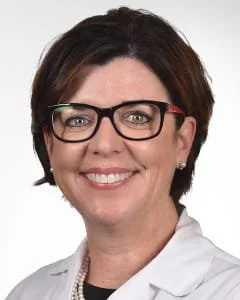
Mary Theresa Busowski-Martin, MD
Board-certified physician in Orlando, Florida, specializing in internal medicine, infectious diseases, and hospice and palliative medicine
Professional Roles & Affiliations
Orlando Health: She is a member of both the Internal Medicine Faculty Practice and the Infectious Diseases Faculty Practice.
Orlando VA Medical Center: She has served as the Chief of Infectious Diseases.
Hospital Affiliations: Dr. Busowski is affiliated with multiple hospitals, including Orlando Health Orlando Regional Medical Center.
Professional Roles & Affiliations
Medical School: Graduated from the University of South Carolina School of Medicine in 2002.
Internship: Completed an Internal Medicine internship at Palmetto Richland Memorial Hospital (2002–2003).
Residency: Internal Medicine residency at Orlando Health (2003–2005).
Certifications & Expertise
Board Certifications: She is certified by the American Board of Internal Medicine in Infectious Disease and Hospice and Palliative Medicine.
Clinical Focus: Her work includes preventing and relieving suffering for patients with life-limiting illnesses, managing symptoms of advanced disease, and coping with cancer pain.
Summary
Most people hear "palliative care" and think hospice. They're not the same — and that misconception is keeping patients from getting help they need, often for years.
In this episode of Live on Stage Four, hosts Abigail Johnston and Amy Russell-Parliman sit down with Dr. Mary Busowski, a palliative care physician at Orlando Health who has spent her career changing the way patients and providers think about quality-of-life medicine.
Dr. Busowski explains what palliative care actually is — a specialty focused on quality of life at any age or stage of illness, alongside any treatment — and why it should start at diagnosis, not at the end of life. She also walks through what to expect from a palliative care visit, how to find the right provider, and why the relationship she builds with patients is just as important as the symptoms she treats.
In this episode:
Palliative care vs. hospice — the distinction that matters
Why early involvement leads to better treatment outcomes
How palliative medicine addresses emotional, physical, and family needs
What board certification in palliative medicine means and why it matters
Dr. Busowski's personal experience as a caregiver — and what it taught her
This is a conversation for anyone living with metastatic breast cancer, their caregivers, and anyone who wants to advocate for better, more compassionate care.
Key Takeaways
Palliative care is not hospice. Hospice is a subset of palliative care for people with limited life expectancy. Palliative care is for anyone, at any stage, alongside any treatment.
Start early. The best time to get palliative care involved is at diagnosis — not in crisis. Early involvement builds trust, rapport, and a support system before you need it most.
It's about more than pain. Palliative medicine addresses the whole person — anxiety, nausea, sleep, emotional burden, family dynamics, and quality of life — not just physical symptoms.
Fear of the referral is the biggest barrier. Many patients assume being sent to palliative care means they're dying. That fear keeps people from accessing help that could make their entire treatment experience better.
Board certification matters. Since 2008, palliative medicine has been a recognized specialty with its own board certification — meaning your palliative physician has proven, specialized expertise.
The caregiver is part of the patient. Palliative care includes family members and decision-makers, not just the patient. Sometimes the visit is more about the caretaker than the patient.
You can ask for this referral yourself. Patients don't have to wait to be sent. Advocating for palliative care involvement early is something every metastatic patient can and should do.
Good palliative care looks like being seen as a human being. Abigail's story about her sepsis hospitalization illustrates it simply — a doctor who pulled up a chair and asked "how are you doing?" made all the difference.
Personal experience shapes better doctors. Dr. Busowski's own journey as a caregiver for her husband with Parkinson's — without palliative support — deepened her understanding of what patients and families truly need.
Use your voice and platform. The most powerful way to normalize palliative care in the MBC community is to talk about it as an added value, not a last resort.
-
[00:00:37] Abigail: [00:00:37] Hello and welcome to this episode of Live from Stage 4 today. I Abigail Johnston and my dear friend Amy Russell-Parliman, will be talking to Dr. Mary Busowski . Dr. Busowski has been my palliative physician through Orlando Health for the last few years, and she's going to talk about myths, like hospice is not the same as palliative care.
She's going to talk about the timing of palliative care and the value of palliative care. Just a trigger warning for anybody who's listening, palliative care is something that can really help at the end of life. Just like it can help during an experience with something like stage four metastatic breast cancer.
We hope that you will learn from this conversation and take the information back to your team so that you can get the help [00:01:37] that you need, the right interventions, the right healthcare workers, the right providers, at the right time for you. Now, let's get to it. Dr. Busowski, would you introduce yourself?
[00:01:52] Dr. Busowski: Thank you. It's very nice to be here. I appreciate this opportunity very much. I am Mary Busowski Martin. I am a palliative care physician at Orlando Health. I see patients outpatient in my outpatient clinic, primarily oncology patients, but I also have inpatient responsibility where it's more of a general, patient population.
[00:02:13] Abigail: Have you always been a palliative physician?
[00:02:17] Dr. Busowski: No. I started out as a nurse. I was a neonatal and pediatric intensive care nurse, decided after my children went to school I would start taking classes and I decided that I needed a goal and so I set the lofty goal of going to medical school. In 2008 was the first year that the American Board of Internal [00:02:37] Medicine recognized palliative medicine as a specialty where you could get board certification so we were the first group in 2008 to be board certified and I had a outpatient practice where most of my patients came from the cancer center, so managing complex multimorbidity on top of the issues that being treated for cancer bring. Did an infectious disease fellowship, probably just for selfish reasons because I really enjoyed the learning and the studying and had an opportunity to be an ID fellow and then came back to palliative medicine. Full-time about 10 years ago really what I've observed is I am the culmination of my life experience, and so all of my life experience, clinical background have lent very well to what I do now.
[00:03:25] Abigail: Do you think that people who are in medical school now understand palliative medicine and how that fits into their own practice [00:03:37]
[00:03:37] Dr. Busowski: today? It's getting better. When I was training and doing residency, no, it was not something that was taught, integrated, or brought up. Interestingly about three years ago, the A-C-G-M-E, so the accrediting body for medical education determined that palliative care needed to be embedded into internal medicine residency training. And so for the last three years, I have a medicine resident intern that they rotate through as part of a mandatory experience. I think it is now working its way back into medical school curriculums.
But despite the growing body of evidence supporting the value of palliative medicine, despite it being evidence-based guideline for just about any chronic disease state, people still don't know how to apply it. And I think there are still a lot of myths and misconceptions about what palliative medicine is and what its role is alongside of concurrent treatment.[00:04:37]
[00:04:37] Abigail: Well, let's go there. Let's talk about some of these misconceptions and would you first be able to differentiate palliative medicine from hospice care?
[00:04:49] Dr. Busowski: Palliative medicine is a specialty of medicine that focuses on quality of life, period, at any age or stage of illness. Whether treatment is palliative or curative, it doesn't matter. So palliative medicine should be integrated alongside any disease state at the beginning. Hospice is palliative care, but for a very specific population, hospice is palliative care for people with limited life expectancy.
[00:05:20] Amy: Would you say hospice is like a specialty subset of palliative care? Like when the disease is advanced?
[00:05:28] Dr. Busowski: That's the way I look at it because I think once somebody is on hospice, somebody else has already done the hard [00:05:37] work. I wasn't part of that person's journey four years ago when they were diagnosed with something serious.
Hospice also focuses on quality of life, but it's supportive care when any other kind of intervention or curative treatments are known, effective or not tolerated. So they're very different. And that's the challenge that we have differentiating palliative care from hospice.
Because if people say, oh, I wanna send you to a palliative care doctor, they're automatically thinking I'm dying. And I have people coming to see me just absolutely terrified. They have no idea why they're being sent to me, what our role is, how we can work together, to manage distressing symptoms, to optimize your quality of life.
So, I think that's the biggest challenge that we face.
[00:06:24] Abigail: You mentioned that when someone is diagnosed with a serious or chronic illness, that at the beginning is the best time to get palliative care involved. Would you talk a little bit more about that and why [00:06:37] that's important?
[00:06:38] Dr. Busowski: Absolutely. And this is my life's mission to talk about, because of the fear that's associated, the shock of a diagnosis, the anxiety, the loss of control, the unknown and I think at the beginning you're so focused on treatment,, that you don't think about how is this impacting the rest of me? So ideally, palliative care starts at the beginning alongside serious illness diagnosis. It would be much easier for me to develop rapport. To help people get to know who we are, my partner and I joke that we are doctors not so scary. So by the time people meet us and they get an idea of what the focus is, of what we do not, when we're faced with a crisis, we're not making critical decisions. We're not in crisis mode. It is just developing rapport, developing trust, developing that avenue of another resource to utilize through your [00:07:37] journey if you're experiencing anything that's interfering with your best quality of life.
So ideally, it starts early when things are exploratory and we develop that rapport as things change. Then we already have that relationship and that trust, and we can already start to talk about, the things we're worried about, the things we wish for, the best case, worst case kind of conversations that sometimes we have to have.
But if we wait until things are really in crisis, if I'm meeting somebody for the first time in a hospital with acute symptoms, after the bottom's fallen out , , it takes a long time to help them realize the value that we can bring and where we fit in their care.
[00:08:23] Abigail: Since you do both palliative medicine, outpatient and inpatient, would you contrast how the two are different?
[00:08:30] Dr. Busowski: So inpatient typically we are meeting people. In crisis we are meeting [00:08:37] people who have not had the opportunity sometimes to, understand their illness, where they're at in their disease trajectory , what their understanding is, what their goals are. So we're really dealing with crisis. They may not have ever heard of palliative care so when I go and introduce myself, I introduce myself and I say, palliative care is a specialty of medicine that focuses on quality of life. We are experts at symptom management, whatever that symptom may be, whether it. Anxiety, pain, nausea, and our job is to work together for you to have the best quality of life possible. A big component of inpatient, is the advanced care planning piece. To me that's very late in the game and I really would like to take that conversation and move it forward a few years in an outpatient setting. Or where I would like to see the future of powdered medicine go is [00:09:37] post-acute, following people home, wherever they go, and having what I call kitchen table conversations when you're not in crisis, when you're not threatened, when you're not afraid of me or what palliative care is that would be ideal.
[00:09:51] Abigail: It sounds too though that there's probably more than just the patient involved in some of these conversations. You probably have to involve family members and other decision makers also. Can you talk a little bit about that?
[00:10:05] Dr. Busowski: Sure. I think that's why it's never a quick and easy visit because initially, it is gaining permission to talk about it, explaining who I am and what I'm there for, feeling out where people are, if they're receptive and then asking permission if there are people in the room because I don't think you can make good choices unless you have all of the information asking what kind of support they have, who are the key decision makers and who they would want present to have a conversation. A lot of times it's coming back [00:10:37] when people have family there and so then it's just making yourself available to, uh, have the right people present.
[00:10:47] Amy: Sometimes family members tend to take over and don't allow the patient to ask the questions or set realistic expectations.
When you're doing that initial meeting, is that the time when you would talk to the patient about what their expectations are from palliative care? Or are you just gathering information and it comes in like a second or a third visit?
[00:11:10] Dr. Busowski: It depends. For me, it's so organic, right? It's feeling out at the moment. And sometimes family members can be very defensive or angry, or emotional and so it's not a one size fits all or one and done. Asking the family, what are your fears and concerns? What are your understandings? What have you been told? Because I'm not there to threaten them. Oftentimes tempering hope with [00:11:37] the reality of a clinical situation is very difficult. So sometimes people get really upset with me, and misunderstand, um, where we're at.
But it really, I think depends on the urgency of the situation, the acuity of the situation. Outpatient. We have the opportunity. Sometimes people come, very knowledgeable and very equipped, and they even ask to have palliative care involved upfront.
Other people come after they've experienced months of unmet symptom burden, and they meet me for the first time and they just break down and say, why weren't we introduced to you earlier? I wish I had met you three months ago.
I don't wanna be seen as a handoff or as the doctor of last resort. I wanna be integrated upfront when someone, either expresses need or has, treatment so toxic that by the time you get halfway through it, you may feel like you're dying there's very simple things we can do to help people tolerate treatment. And the other thing I tell people is our job is [00:12:37] to work together so that you can feel the best, that you can feel so that you can optimize your treatment. Because if your treatment's delayed because you're nauseous or because your pain's not controlled, or you're dehydrated and back in the hospital and no one saw that coming, that impacts your cancer treatment as well.
[00:12:57] Abigail: What are , maybe the key points other than at the beginning where a patient could ask for a referral to palliative care if it's not happening at the very beginning?
[00:13:10] Dr. Busowski: I think getting awareness out that palliative care doesn't mean it's end of life and that, there are a lot of things that a palliative care person can offer. I thought about this in preparation for this interview. What is it about palliative care? Like what's in the syringe that I administer, that I do? for me, sometimes it's just holding space for people. It's just a place where people can go and not have to focus on data points, numbers, points, scans, [00:13:37] what's next, but bringing that worry basket in full and just sorting through it one by one and just.
Either validating how you're feeling, normalizing some of the side effects or symptom burden, so you don't feel like it's just you. I often wonder , what people's experiences are like that don't have a palliative partner to go to and I really hope that people, when they come to see me after they meet me, and we have our first few interactions that I'm the doctor you look forward to coming to, like, when you are going to get your nails done or your haircut, it should be something like, this is for me, this is about me, this is my time. Now let's see what we can do to help minimize the impact. The other thing is people living with metastatic cancer are living longer and it has changed the trajectory. we have to look at the cumulative toxicity of treatment. So I don't think we can apply things that we learned 10 years ago and there's so much [00:14:37] more on the horizon.
[00:14:38] Abigail: One of the myths that we hear quite a bit in the metastatic breast cancer community is that palliative is for pain management. Is that something you encounter as well?
[00:14:48] Dr. Busowski: I do. And when people say, oh, I'm consulting pain management. And I say, well, good. He's across the hall. It's not me. I really try to define for myself that I'm not pain management. I do not manage chronic non-malignant pain. I'm a lot more than pain management. Yes, I'm expert at managing symptoms. , And not all pain is physical, right? So there's a lot of other pain that we address within the context of our visit. we've been really good about defining for ourselves who we are and where our boundaries are so we can focus on the people who need us the most.
[00:15:22] Amy: So if I were to get a palliative care doctor, what are some things that I should look for as a patient to know that I'm being managed the right way? I know I'm the center of my care, but what are some things as a [00:15:37] patient that I should look for when choosing the palliative care team?
[00:15:40] Dr. Busowski: That's a good question. I haven't thought about it from the other way around how people would interview me. I think , it has to be someone that can, establish rapport with you. Who has time to develop a long-term relationship look at their expertise, the way they communicate. How difficult is it to communicate with their office? How difficult is it to get, timely refills? What's their triage system? Is the doctor available to you?
I am very often giving patients my personal cell phone. Because when there's a crisis or a question, it's never Monday through Friday. It's always after hours or on the weekend. And so making myself available for people who really are navigating crisis, so they can bounce questions off me, is important.
How you establish [00:16:37] rapport with anybody or make an assessment of anybody? I think they need to be able to sit at eye level. They need to appear, un rushed. They need to be comfortable with initiating, difficult conversations. Hopefully are expert in symptom management, and are part of an interdisciplinary team. And have rapport with who your other people are on the health team the oncologist , because a lot of times, I'm not the person who can fix it, but I'm the person who can report it.
[00:17:08] Abigail: I'd like to shift and talk a little bit about the personal effect on the work that you're doing.
So how does it affect you personally? Do you take it home with you? You see people for a long period of time and must develop relationships with them?
[00:17:23] Dr. Busowski: I do. And I don't think you can help but do that. For me, there are patients that I'll never forget. And if I've worked with people for a long time and they are approaching end of life and we've had that relationship, letting my [00:17:37] patients know how much I've appreciated them, what I've learned from them, what I will take away from, having known them and how I can apply that. I think I honor patients who I've taken care of that are no longer here, by using that to help people who are in the midst of what has to be. I can't even imagine how overwhelming it would be, even on good days not to have that anxiety about what could be next.
I have a really important job because to me that's the most important thing as a physician., And I have the opportunity now to train the next generation is that your most sacred duty as a physician is to. Have empathy and to help people understand where they're at. You can be honest and convey information in a way that's compassionate if it comes across genuine and not robotic.
[00:18:34] Amy: What can we do to help [00:18:37] palliative care become a standard of care for metastatic patients or patients with chronic illness? How can we push the needle to make that part of standard of care?
[00:18:47] Dr. Busowski: Just by doing what you're doing now , helping dispel some of the myths, about palliative care. Don't be afraid to incorporate palliative care, early on, because that person can be that lifeline to you when you're experiencing something. Because even if you're not experiencing anything, just having cancer, it's like this rollercoaster. Your PET scan's coming up and you start to ramp up and you know that you're gonna go down.
just having someone to acknowledge that or maybe help with if during that time you are anxious, you're not sleeping, they can help with that. Um, so going back to your providers and saying, I wish I had been sent to this person sooner.
I wish I had been introduced to palliative earlier in the disease course, because I think you have the best platform [00:19:37] and the biggest voice in terms of how, palliative care could be integrated earlier into people with a diagnosis of metastatic breast cancer. So use your platform, use your voice, and when you talk about it in your groups, talk about it as something that's an added value. It's not one more doctor I have to go see .
[00:20:00] Abigail: Have you had some personal experiences that are now informing how you're practicing medicine?
[00:20:08] Dr. Busowski: Yeah, definitely. My goal this year as I kind of regroup. My husband died in August after, a long struggle with Parkinson's disease and throughout his journey. We were never introduced to palliative care.
I would go to his appointments and we went to multiple centers. We've been to the big centers in Florida looking for second opinions and treatment options, and trying to be his patient advocate. I would sit back and I would think, here's this brilliant expert that we've traveled three hours and stayed in a [00:20:37] hotel to see, I wanna see if this guy brings up anything about advanced care planning end of life.
If I hadn't been the one to address things or to help my husband understand, I wouldn't have known or had the opportunity and we would've been in crisis after crisis.
So I use that as a point, and I tell my patients now, the greatest gift that he gave me was clarity. And I wouldn't have had that if we didn't have the opportunity to discuss it. So somebody has to have the courage to be able to address it so people can start to make their own choices and so that their family can start to, be aware because even though you're clear and the choices have been made and the hard things have been talked about, when that time comes it can be overwhelming if you don't have that piece from being clear about things. So thank you for that opportunity. [00:21:37]
[00:21:38] Abigail: Is there anything we haven't talked about that you feel as a palliative physician that you would like to say to patients? That's our main audience is patients living with metastatic breast cancer.
[00:21:51] Dr. Busowski: How I describe myself is a joyful practitioner of my trade. And so don't be afraid of us, come to us with expectation that even if we can't fix the big things. Holding space for you and acknowledging that, and then helping explore what's important to you and what your goals are can help you cope with the things that you have to cope with.
I admire all of my patients very much because I can't imagine the resilience that it takes, the courage that it takes, to live your life to the fullest while trying to navigate all the things that you have to navigate in terms of your cancer and your [00:22:37] treatments and your side effects and your appointments.
Please know that I hold all of my patients, in such high regard because they truly are, the warriors and for the people behind them, the caretakers.
[00:22:48] Amy: Thank you for taking the time to explain, 'cause it's very empowering as a patient to realize what we should look for, what questions we ask, and that somebody's alongside us, not like charging the way in front of us, but there to support us.
And I think the biggest takeaway for me is that you're also there to help support the caregiver and the caretaker with making the decisions. I think that changes the focus and the perception of how valuable palliative care can be for a patient and their loved ones.
[00:23:22] Dr. Busowski: Yeah, absolutely. Yeah, sometimes the visit is more about the caretaker and the patient just as quiet, but that's just as therapeutic.
That'd be fine. I just need to, expand my clinic hours and I've been very, I'm very fortunate. We have good support. [00:23:37] But what I worry about is I'm only seeing the tip of the iceberg.
[00:23:40] Abigail: Yes. You're absolutely right. Thank you again. Thank you for your time and for having these hard conversations and for your own vulnerability today .
[00:23:50] Dr. Busowski: Yeah, I hope it resonated and came across just genuine, from my heart.
[00:23:54] Amy: You might have a ton of people moving to Florida to look you up since you can't do telehealth,
[00:24:01] Abigail: We are so thankful that Dr. Browski took precious time out of her day to share this hard one wisdom with us. Stay tuned for a little discussion between Amy and I as to what our biggest takeaways were from this episode.
What were your takeaways? What were the most important things that you heard today
[00:24:24] Amy: Palliative care, should be offered earlier on for disease management and, it helps set expectations, it's a great resource for the patient as well as the [00:24:37] caregivers. And if you have multiple people that are helping you make decisions, it's important to have everybody at one meeting. So all the expectations are set for everybody in the room and the conversations. And the other thing is it's not hospice. That's the most important thing. It's not hospice. It's managing how to give you the patient the best quality of life.
That's the best takeaway.
[00:25:03] Abigail: I think the clearest example of how palliative care is different to me was when I was in the hospital when I had sepsis in 2022 and one of Dr. Polowski's partners came in to talk to me in my hospital bed. Right? You're lying on the hospital bed and when doctors come in, they stand and loom over you.
Dr. Bakis partner was the only person who came in, pulled up a chair and just said, how you doing? Instead of reeling off all of my blood work and talking about how it was [00:25:37] different or talking about how the next step might be or how they think I'm doing, he just sat down and treated me like a human being.
We can dress up palliative care in all kinds of different ways, but to me, that action of treating me like a human being and relating to me physically on the same level, but also in the same level as another human, that to me is the best example of how palliative is different from some of our other practitioners. Not that they're doing anything necessarily wrong, but that we as patients can really benefit from being treated like a human being.
[00:26:15] Amy: So you felt like you were seen as Abigail, not as a patient?
[00:26:19] Abigail: Yeah. I wasn't a number, I was a human being and that was really important to me in that very scary time of being told that the infection had entered my bloodstream and it was very serious and no one actually said this is a life-threatening situation.
But I knew that it was [00:26:37] pretty serious. So really, that really made an impact on me.
Thank you for listening to this episode of Live From stage four. This podcast is all about those of us living with metastatic breast cancer, and we invite you to let us know if there's anything else that you would like to hear us talk about. We could find an expert talk among ourselves, however it is that you would like to hear more.
This episode was produced by me, Abigail Johnston and my dear friend Amy Russell-Parliman. Thanks for listening.
