
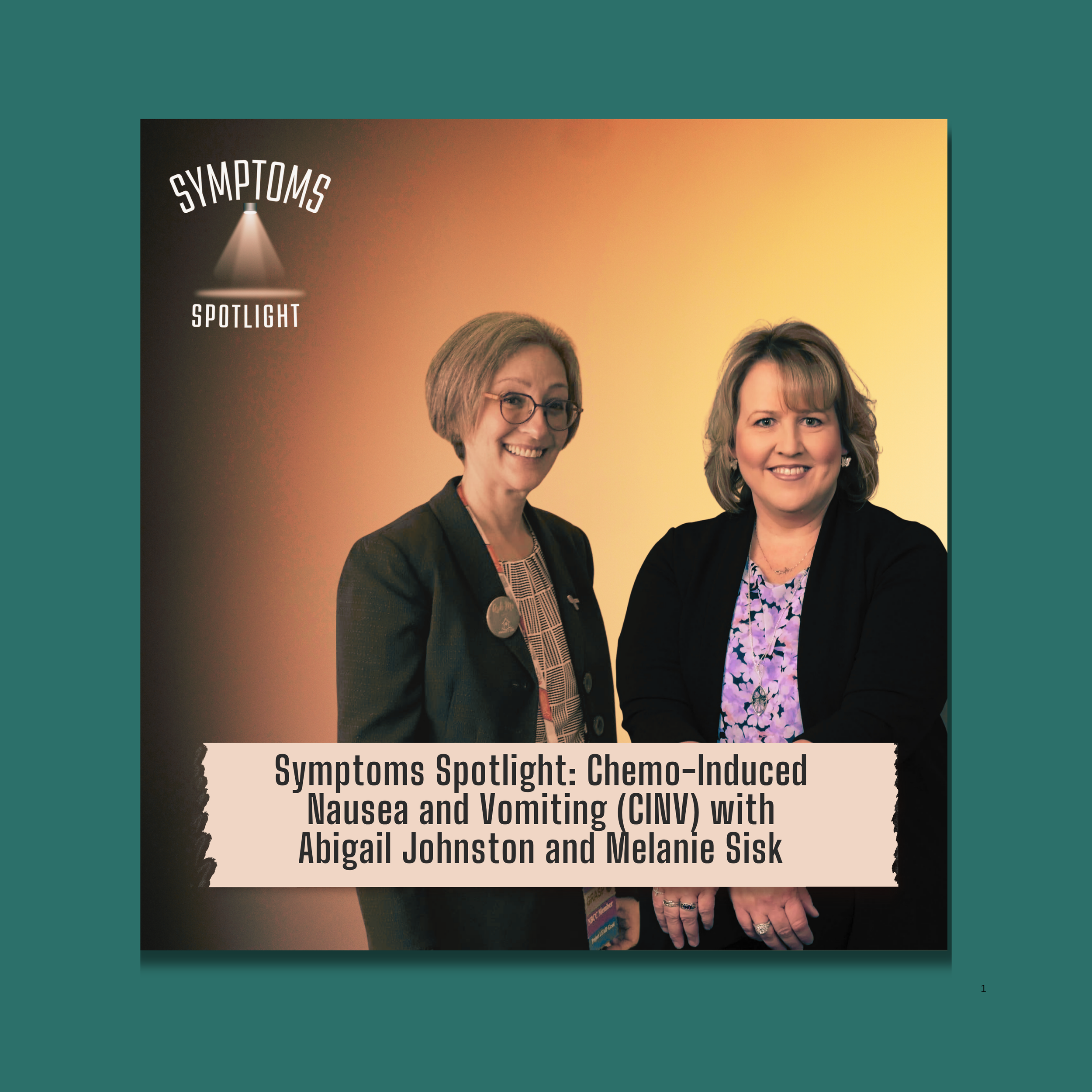
Symptoms Spotlight: Chemo-Induced Nausea and Vomiting (CINV) with Abigail Johnston and Melanie Sisk
Live from Stage 4 | Episode # 044| 09/01/2026 | Symptoms Spotlight
Listen to full episode :
Hosts
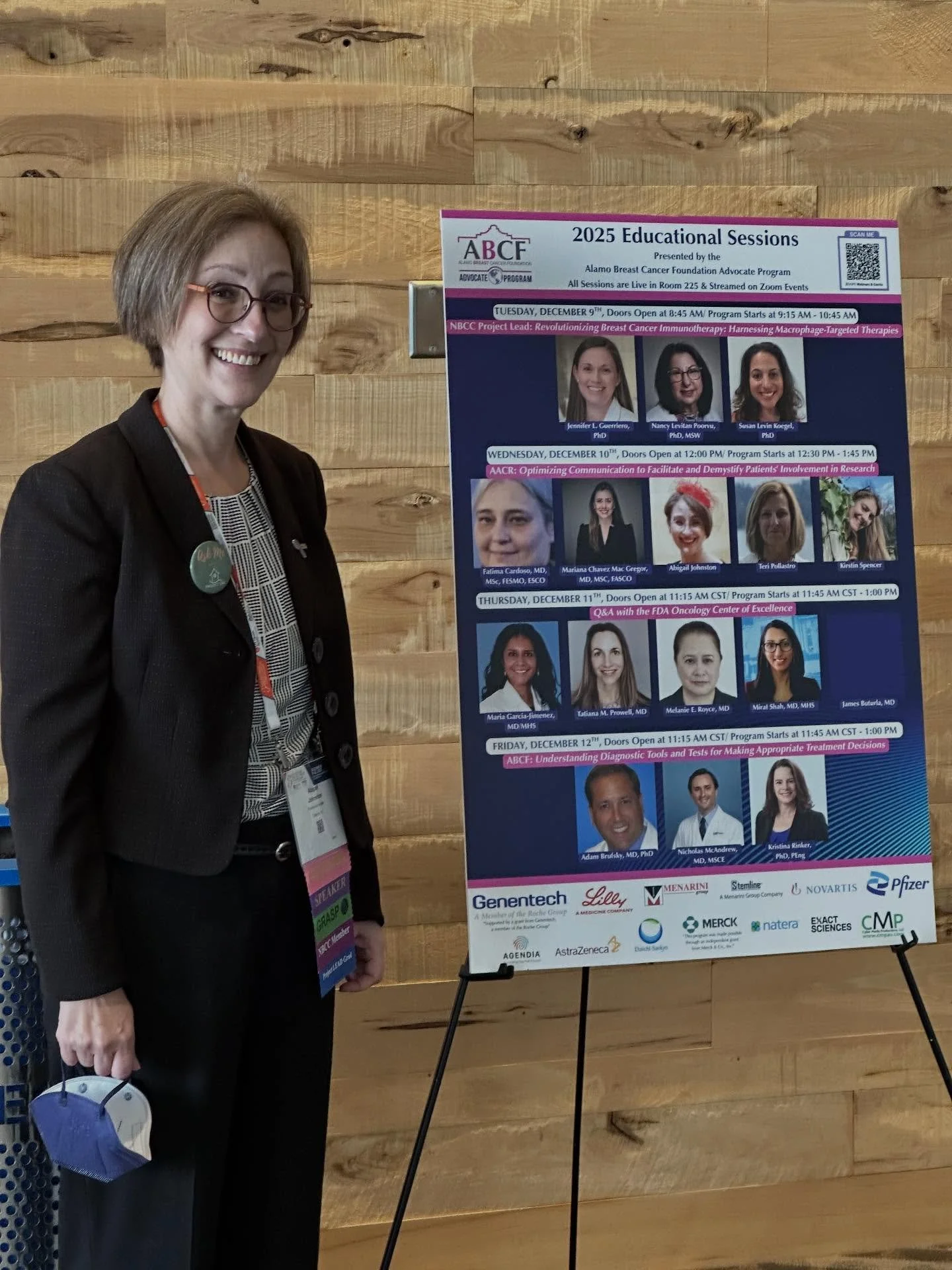
Abigail Johnston lives in Orlando, Florida and has been an attorney since 2002. In 2017, while tandem breastfeeding her boys (then 1 and 3), Abigail was diagnosed with de novo Stage IV Metastatic Breast Cancer (MBC) and soon thereafter discovered that she has a genetic mutation that predisposed her to developing cancer at ATM. Since her diagnosis, Abigail has focused her efforts on patient advocacy and supporting those people in the MBC Community through her experience and training, virtually and in person. She currently serves as the Director of Mentorship, Legal Clinics and financial services at Project Life, a founding member of the PIK3CA Pathbreakers, and volunteers with a variety of organizations including the MBC Alliance, FORCE, METAvivor, and many others. Connect with Abigail via her blog at NoHalfMeasures.blog.
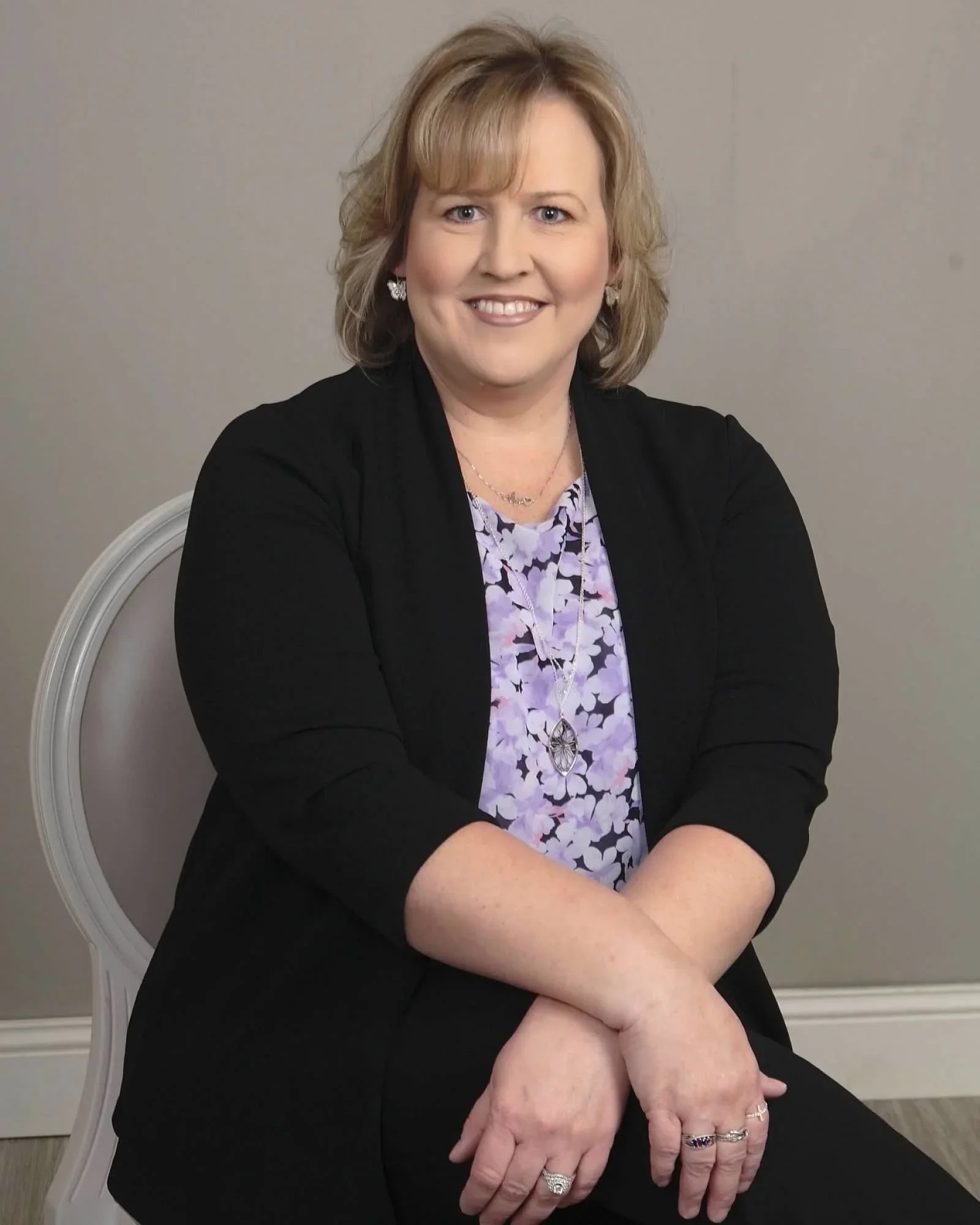
Melanie Sisk was a wife, mom of two young boys, and working full-time as a Registered Nurse when she was diagnosed with Stage 1A Breast Cancer at the age of forty-three. She completed her recommended surgery and radiation and was on endocrine therapy. Melanie thought she had put cancer behind her because she did everything right. However, she was diagnosed with Metastatic Breast Cancer at the age of forty-seven. Due to her metastatic treatment protocol and disease, she retired from her nursing career. Melanie has dived into advocacy work with an urgency to do what she can, while she can. She helped to start and moderate a local support group in her area of North Carolina called Piedmont Triad METsters. She is a trained volunteer with Cancer Services, Inc. and a Peer to Peer Support Group Leader and Light Up MBC State Captain for METAvivor. She is a Living Beyond Breast Cancer 2023 Hear My Voice MBC leadership alumna and a mentor with Project Life. She also serves on the MBC Leadership Committee for Surviving Breast Cancer. She is also a part of the new initiative, PIK3CA Pathbreakers.
Summary
Chemotherapy-induced nausea and vomiting (CINV) affects many patients undergoing cancer treatment, yet traditional remedies often don't provide relief. In this episode, Abigail Johnston discusses her personal experience managing CINV and shares practical strategies for coping with this challenging side effect.
You'll learn about common medications used to prevent and treat CINV, including Zofran and Emend, and why a multi-intervention approach is often necessary. Abigail explains the importance of tracking when nausea occurs throughout your treatment cycle and how this information helps your medical team provide better support. She also covers warning signs of intractable nausea and dehydration, dietary approaches, and when to reach out to your care team.
Whether you're currently experiencing CINV or preparing for treatment, this conversation offers practical insights, encouragement, and actionable steps for managing this common side effect and maintaining quality of life during cancer treatment.
This episode is for general information only and is not medical advice. Please talk with your own care team about your specific situation.
Key Takeaways
Chemotherapy-induced nausea and vomiting (CINV) requires different management strategies than everyday nausea. Over-the-counter remedies that work for general nausea may not be effective for CINV.
Track when nausea occurs during your treatment cycle. Identifying patterns helps your medical team determine the underlying cause and recommend targeted interventions.
Multiple medications are often needed to manage CINV effectively. Common options include Zofran (ondansetron), Emend (aprepitant), and dexamethasone (a steroid that works synergistically with antiemetics).
Delayed nausea can occur days after chemotherapy administration, especially with certain drugs like Enhertu (T-DXd). Discuss prevention strategies with your care team before treatment begins.
Suppositories and medications like Reglan or Compazine can be valuable when you're unable to keep oral medications down due to severe nausea.
Supportive measures matter: staying hydrated, eating mindfully, and moving your body can complement medication-based approaches.
Watch for signs of intractable nausea (uncontrolled vomiting that won't stop). Know when and how to seek medical help to prevent dehydration and electrolyte imbalances.
Always communicate with your healthcare team about nausea and vomiting. Keeping a symptom journal helps them provide better care and adjust treatment as needed.
Resources
-
Victoria Goldberg 0:09
Could fewer foot cancer be closer than you think? Welcome to Live from Stage 4, where MBC takes center stage as we talk to experts, share inspiring stories, break down signs, and shine the spotlight on what matters most. Because when it comes down to it, the pod, for us and by us, is all about us.
Abigail Johnston 0:36
Hi, I'm Abigail Johnston.
Melanie Sisk 0:39
Hi, I'm Melanie Sisk.
Abigail Johnston 0:42
And we're here today to talk about symptom management. This series is called Symptoms Spotlights, and we will regularly be bringing information to you on various symptoms caused by cancer or the treatments for cancer and how different patients are managing them. We learn so much from each other. What a great example of how we are stronger together.
Melanie Sisk 1:03
And we are so excited to bring this hard-won peer wisdom directly to patients. And please let us know if there is a symptom you would like us to talk about. And now let's get to it. Abigail, what symptom are we shining the spotlight on today?
Abigail Johnston 1:20
So today we are going to be talking about something that many of us experience as we move through different lines of treatment. And that is chemotherapy-induced nausea and vomiting. And I did not realize at the very beginning of my experience with stage four metastatic breast cancer that when nausea and vomiting is caused by a substance that you were taking, like chemotherapy, that your go-tos for addressing nausea and vomiting may not work as well. And so because I have had some issues over the years with nausea and vomiting, I'm always just easily nauseated. I had my bag of tricks that I would use, especially like during pregnancy, like things I could smell or different pressure points, those kinds of things. But none of that worked when it came to chemotherapy-induced nausea and vomiting. And I thought we could talk about that a little bit more. Melanie, has that been something that you've experienced?
Speaker 2 2:23
Abigail, not yet. I know that that's something I will experience one day, but I'm not there yet. I've only been on the targeted therapy so far. And I have experienced a little bit of nausea and vomiting, but it's not chemotherapy induced. So I can't add much to this conversation, but I'm so eager to hear things that you have used that has helped you. And this is a great education for me that I can use in the future.
Abigail Johnston 2:53
All right. Well, let's talk a little bit about that. So the very first thing that I would suggest to anyone is if you are having any kind of chemotherapy-induced nausea and vomiting, start keeping track of the days or the circumstances under which you are experiencing that. Many of us are going to get medication as pre-meds when we get IV chemotherapy. And the two that I have seen most often is Zofran. And then for those of us who are allergic to Zofran, Aloxi. And that's odanzitron is Zofran and Palonosetron is I'm sure I'm saying that wrong, but that's Olexi. So those are the IV Antiemetics that we typically see. However, having just experienced not too long Enhertu, which is also called TDXD, they discovered that just one was not sufficient. And so there needed to be multiple things or multiple interventions for nausea and vomiting, especially as it changed over the course of a cycle. And so another thing that I did not realize was also helping with nausea and vomiting is dexamethasone, which is a steroid, something that I have a love-hate relationship with because it can cause a whole lot of sleeplessness. And I don't always love the chipmunk cheeks that you tend to get when you're getting a lot of steroids. But the interaction between the IV, Olexi, or Zofran, and the steroid, that helps to cover the nausea and vomiting. And then a lot of times there are over-the-counter medications that people will take. Olanzepine is one that was recently approved for the treatment of chemotherapy-induced nausea and vomiting. But one thing that not very many people get, and is something that my neurologist prescribes for me, are suppositories. So a lot of times when you get into these nausea-vomiting situations, you can't keep anything down. And that includes the medication that might help you avoid nausea and vomiting. Another medica tion that I take at home is called Kytril granisetron. And that has helped me quite a bit. But they also say that watching what you're eating, getting up and moving around, just normalizing your system generally can really help. But keeping track of when you see the nausea showing up in your medication cycle can help your doctors hone in on what might be causing the nausea and vomiting, and then what interventions may be the most helpful. But I have to say, I hate vomiting. It's just, I will do so many things to avoid actually, actually vomiting.
Speaker 2 5:54
I am there with you, Abigail. There's been several times when I feel so nauseous and I have like mind over matter, talked myself out of it. You know, your mouth's filling up with saliva and you're like, oh, it's coming, but then it's like mind over matter. And there's a few times when I've been able to talk myself out of doing it, but then there are times when I couldn't, and then you do it, and then when you're done, you finally feel better. But yeah, I'm there with you. I would much rather have diarrhea for 10 hours straight than vomit. I hate vomiting. And that's one thing I I don't miss about pregnancy. I did a lot of that when I was pregnant. And so haven't done a lot of it since then until, of course, being diagnosed with cancer. But I haven't had near as much as you had, because I haven't had those IV chemotherapy agents yet. But I have had some definitely nausea and vomiting, with I think just different things causing it.
Abigail Johnston 6:54
Yeah. Well, the biggest thing you've got to watch out for, and I know you know this, Melanie, is making sure that you don't get dehydrated, making sure that you're not in a situation where I learned a new term a few years ago where you get into what's called intractable vom nausea and vomiting. And that is when you just can't break the cycle. You can't stop throwing up whatever, whatever you're eating. And so making sure that you are aware of how to get help in that situation so that you don't get so dehydrated that other things happen, that your electrolytes get out of balance. And so definitely check in with your providers if you are receiving chemotherapy or having these struggles with nausea and vomiting. When is the right time to call? Where to call, and where to go if you need, say, fluids or if you need your electrolytes balanced, meaning you're really low on, I don't know, for some reason, I always lose my potassium sooner than any other of the electrolytes. And so having getting an infusion of potassium or one of the other electrolytes, because no one wants to take those gigantic potassium pills, then knowing where to go and knowing what to do when you get into those situations is so important. So you don't end up in worse shape.
Speaker 2 8:13
Exactly. And one piece of advice I can give if you're questioning yourself, should I let my doctor know about this? The answer is yes. If you're questioning it, let them know. Call the nurse, let her know what's happening. If it's not that important at that time, or if it's not as critical, they'll let you know. And then if it is, you'll be glad that you called. So my advice would be keep a journal and definitely keep up with your side effects and how often you're having those particular side effects or any particular side effect because you may not even think it's related to your treatment. And it could be.
Abigail Johnston 8:51
Yes, very important. And if you are on an Enhertu or TDXD, that does cause a fair amount of delayed nausea and vomiting. So they've got that great cocktail they give you at the beginning, but sometimes a week or two in, you can experience a significant amount of nausea and vomiting. And so a quick shout out for the Multinational Association of Supportive Care in Cancer, M A S C C. They have a regular webinar series that always features not just doctors, not just practitioners, but also patients. And there is a webinar on Thursday, May 7th, where they will be talking about this delayed nausea effect and sometimes vomiting that happens from and her too. So would very much recommend that you put that on your calendar if this is something that you're struggling with. Because knowing what is causing the nausea and how that changes throughout a chemotherapy cycle is for me anyway the first step towards figuring out how to manage it, how to live with it, and how to keep thriving.
Victoria Goldberg 10:04
This is Victoria Goldberg. We hope you found this episode helpful. But just a quick note we're releasing it after the webinar has already taken place. But if you would like to watch the full discussion on managing chemotherapy-induced nausea and vomiting, head over to the Multinational Association of Supportive Care's website and you will find the complete webinar recording there.
Speaker 2 10:29
We hope you have enjoyed this conversation as much as we did and learned a little along the way.
Abigail Johnston 10:36
Please don't take any of what we've shared today as medical advice. If you have a question about a product or if an intervention is safe for you, we encourage you to engage with your team. You will find links to each of the products and the interventions we talked about today in the show notes.
Speaker 2 10:52
We want to hear from you. Did you enjoy today's spotlight? Is there another product that you have had success with? Is there another symptom that you would like to hear us talk about? Engage with us. And you may find yourself receiving samples.
Abigail Johnston 11:08
This episode was produced by me, Abigail Johnston, and my dear friend Melanie Zisk. Until next time, be well and keep thriving.
